
Kristine Thompson
Turning the Page II
HCP Fellowship Recipient
November 19 - December 20, 2026
© Kristine Thompson
Artist Panel Conversation
November 29, 2026 from 5:30 - 6:15 PM
Opening Reception
November 19, 2026 from 6:15 - 8:00 PM
© Kristine Thompson
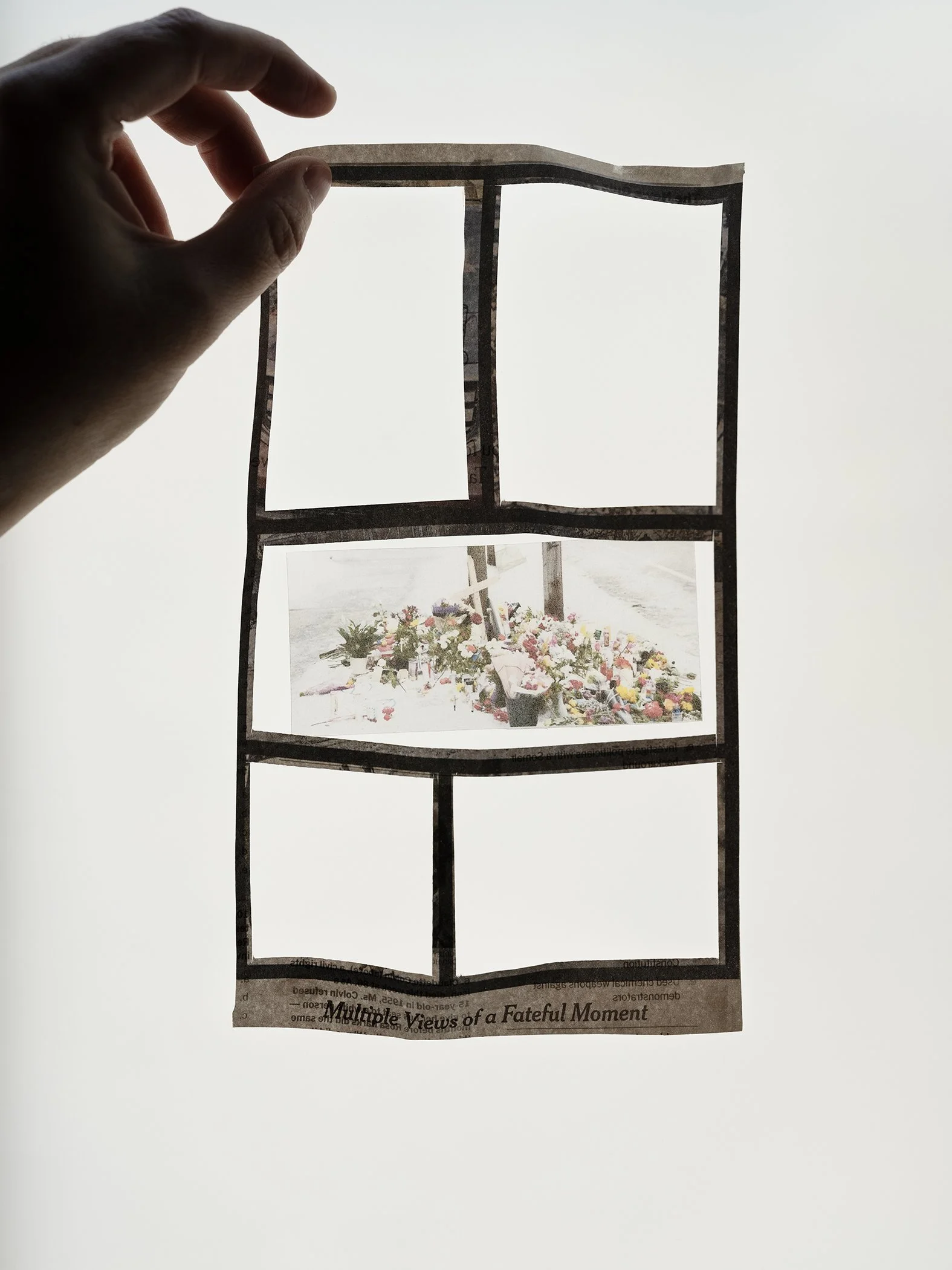
This body of work includes photographs made in response to contemporary political and social concerns. I utilize elements from U.S. daily newspapers and treat the paper and its contents as objects to alter and recontextualize. Via gestures of removal, collage, and restaging, I reflect upon recent wars, court decisions, displays of political power, displacement, death, and resistance.
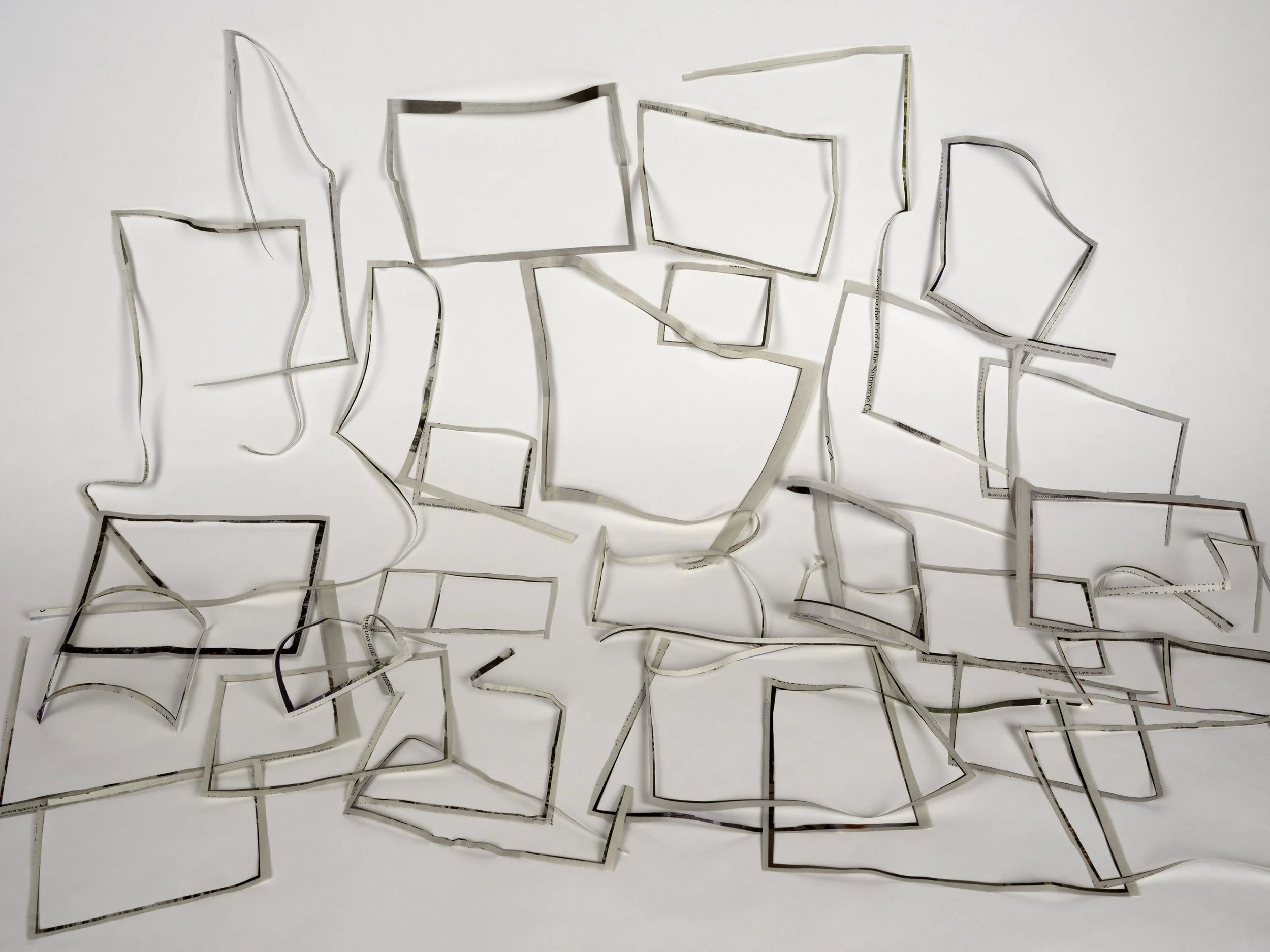
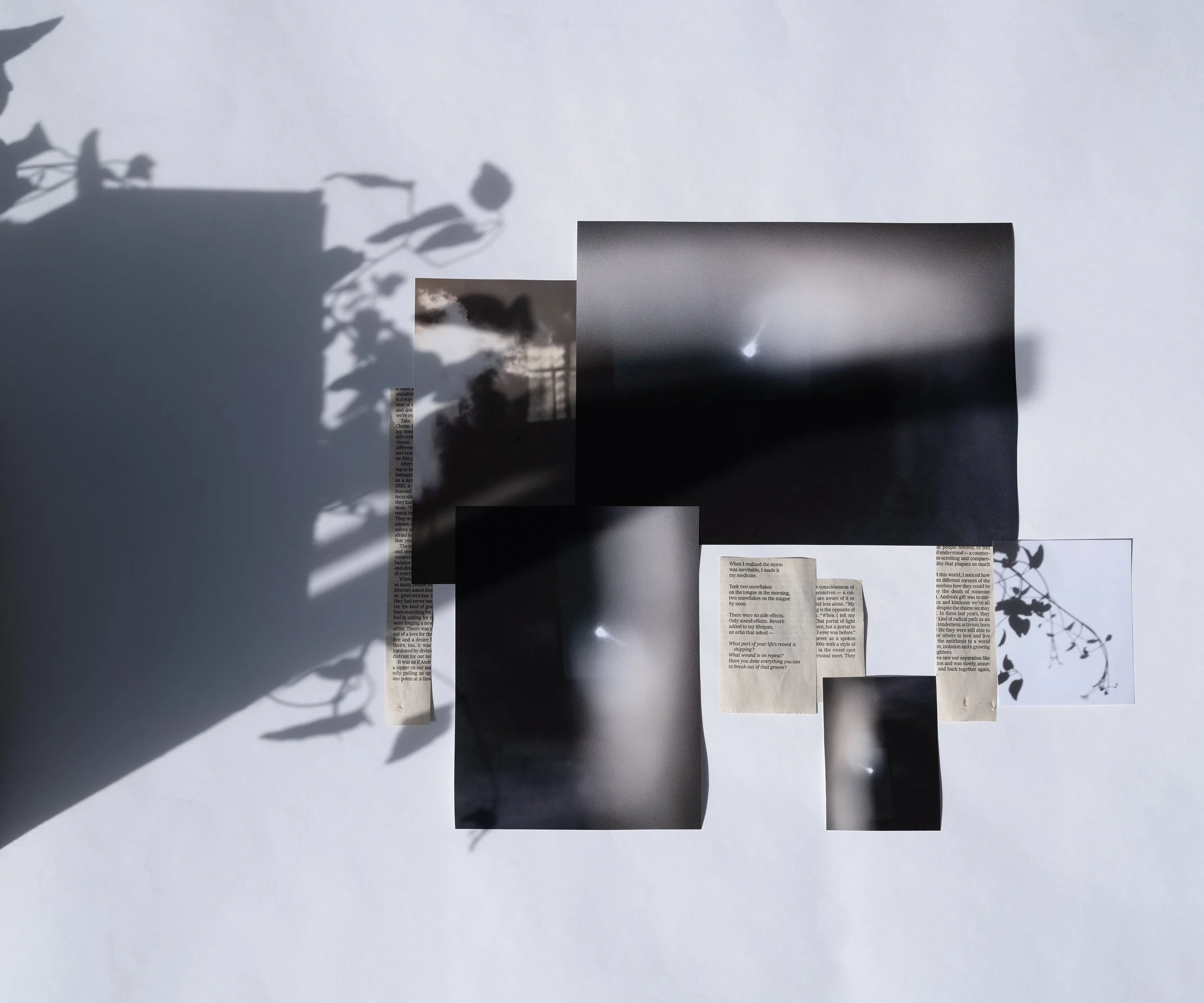
The newspapers are sculpted and staged to draw attention to specific lines of text, to text and image combinations, and to the physicality of the paper itself. Working in a tactile manner allows me to linger with these events and these historical records, in an attempt to come to a deeper understanding of them.
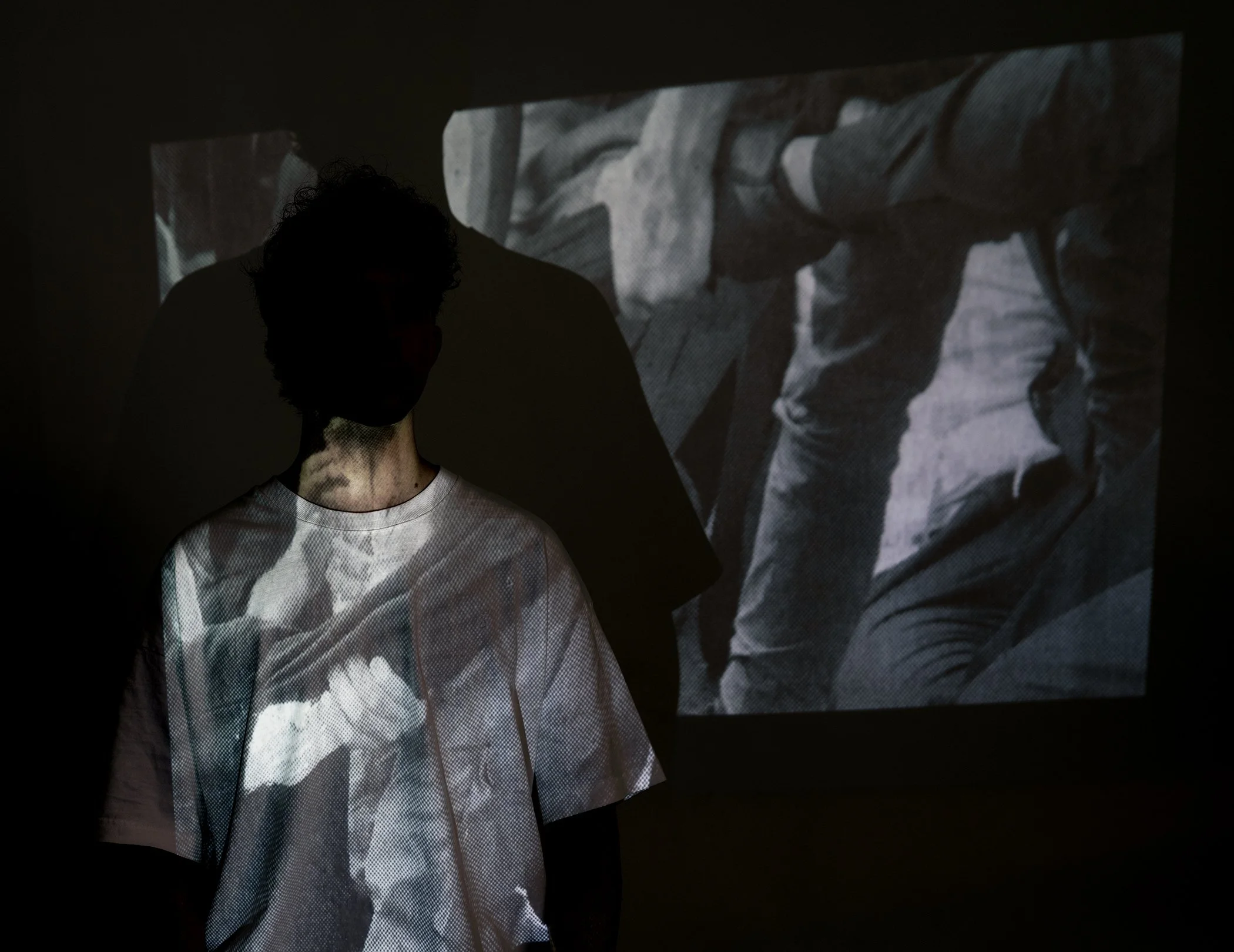
About the Artist: Kristine Thompson
Kristine Thompson is an artist and educator working primarily in photography. Her work considers the circulation and impact of contemporary news media, representations of loss and mourning, and alternative photographic processes. She received her B.S. in Education and Social Policy from Northwestern University and her M.F.A. in Studio Art from the University of California, Irvine. She is currently an Associate Professor in the School of Art at Louisiana State University. Thompson is the recipient of numerous awards, including a D.A.A.D. Fellowship, an Investing in Artists Grant from the Center for Cultural Innovation, and a Puffin Foundation Grant. Her work has been featured in solo and group exhibitions nationally and internationally. Publications include Past & Present Tense, published by theretherenow press and Images Seen to Images Felt, a collaboration with writer Muriel Leung, published by Antenna / Paper Machine.
no insta?
Questions?
For questions about this exhibition, please contact Exhibitions
Exhibitions and Programs Coordinator, exhibits@hcponline.org or 713-529-4755, ext 106.
Juror’s Statement: Natasha Egan
What struck me about Kristine Thompson’s Turning the Page II is the way she dismantles the familiar visual language of the daily newspaper. Through cutting, removing, folding, and rearranging, she transforms a medium intended to deliver information quickly into something that requires a very different kind of looking.
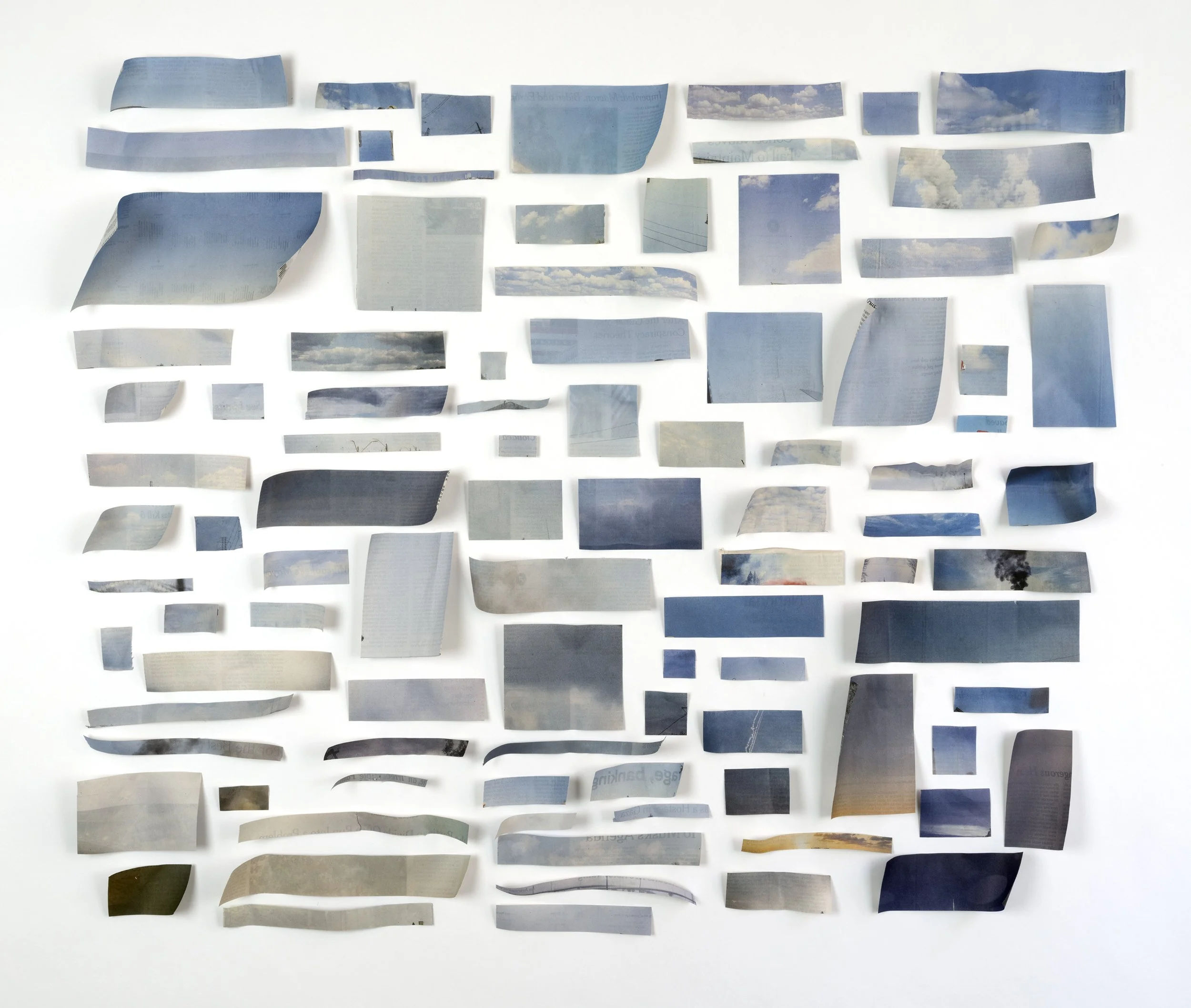
I was particularly drawn to Thompson’s use of erasure and fragmentation. In some works, images are cut away almost entirely, leaving empty spaces and occasional fragments of photographs or text. In 94 Skies Over Sites of Consequence (2021–2024), she extracts only the skies from newspaper photographs, assembling dozens of these fragments together. Removed from the events they originally pictured, the skies are at once beautiful and unsettling; we know that something consequential has happened beneath them, but we can no longer see what. In other works, the physical newspaper itself becomes more sculptural, folded, stacked, or reduced to the outlines left behind after its images have been removed.
These gestures resonate with me in a media-saturated world where photographs of war, protest, political power, displacement, and loss circulate continuously and may lose their impact. Rather than contributing more images to that flow, Thompson interrupts it. Her careful acts of subtraction call attention to how photographs frame events, what remains when they are removed, and how much we bring to an image from our own knowledge and memory. I found the restraint of this approach particularly compelling. By giving us less to see, Thompson asks us to look more closely.
Declaración de Jurado: ARELIIIII
La serie Erosiones existentes de Ressel simultáneamente se deleita y desafía las metodologías científicas y las prácticas archivísticas para examinar cómo se crea, recopila y difunde el conocimiento. De niña, Ressel frecuentaba un pequeño museo de historia natural en Bar Harbor, Maine donde su padre era instructor de biología y creció observando exhibiciones de animales disecados y colecciones de especímenes preservados. Esta experiencia formativa de estar inmersa en un archivo la condujo a comprender las formas, tanto evidentes como sutiles, en que estos repositorios de conocimiento ordenan lo que se entiende sobre el mundo y preservan lo que ha pasado de él; una práctica que, al igual que la fotografía, busca detener el tiempo y mantenerlo en su lugar. La obra de Ressel combina fotografías de exhibiciones museísticas aumentadas y diapositivas históricas para analizar cómo las representaciones científicas de la flora y la fauna son, en sus palabras, "romantizadas y ficcionalizadas", y para considerar, además, cómo dichas imágenes determinan nuestra percepción del entorno y nuestra relación con él. Los deslizamientos en las imágenes de Ressel aluden a los vastos misterios del mundo natural y subrayan las limitaciones de lo que realmente podemos comprender sobre él.