
In the Between
featuring the work of
Stephanie Shih, Ronit Porat, Ksenia Ivanova, Gary Burnley, Luis Javier Maguiña, and Brigitte Bourger
September 17 - November 8, 2026
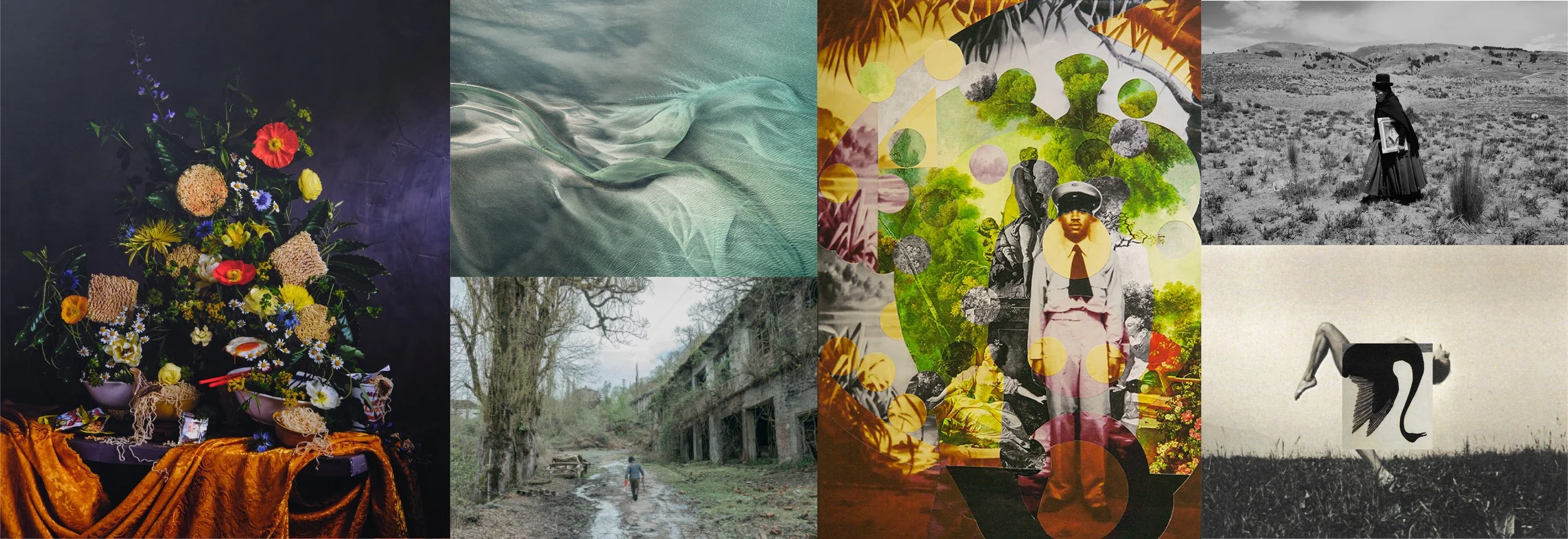
© Stephanie Shih, Brigitte Bourger, Ksenia Ivanova, Gary Burnley, Luis Javier Maguiña, and Ronit Porat
Artist Panel Conversation
Thursday, September 17, 2026 from 5:30 - 6:15 PM
Opening Reception
Thursday, September 17, 2026 from 6:15 - 8:00 PM
Curatorial Exhibition Walkthrough
Saturday, October 24, 2026 from 10:30 AM - 11:30 AM
El espacio entre considera el espacio inestable de la transición: una condición suspendida que se resiste a toda definición fija, situada no en la llegada ni en la partida, sino en la frágil tensión del devenir. Al reunir a seis artistas cuyas prácticas exploran la incertidumbre, la memoria, el desplazamiento y la transformación, la exposición reflexiona sobre lo que significa habitar el umbral entre historias, identidades y paisajes emocionales. Aquí, el "entre" es menos un lugar que una atmósfera donde los límites se disuelven y el significado permanece abierto, mutable e inestable.
A lo largo de la exposición, las mareas, las fronteras, el duelo, la herencia, la migración y las huellas materiales surgen como marcos visuales y conceptuales a través de los cuales los artistas articulan estados de transición y de estar entre dos mundos. Las obras centran la atención en esa misma pausa: ese espacio intermedio aún sin resolver donde se acumulan las historias, las identidades se transforman, y los residuos emocionales permanecen sedimentados en los paisajes, los objetos, y los cuerpos.
Brigitte Bourger explora los estuarios en su sentido literal, donde las aguas cambiantes y los paisajes sumergidos se convierten en depósitos del tiempo acumulado y de las historias ecológicas de la flora y la fauna que habitan estos frágiles ecosistemas. Ksenia Ivanova aborda las fronteras no solo como divisiones geopolíticas, sino también como estados psicológicos y emocionales que fracturan comunidades, historias familiares y memorias colectivas, revelando la incertidumbre de territorios marcados por el conflicto y la impermanencia.
Los que se siguen nombrando, de Luis Javier Maguiña, realizado para The Aftermath Project, habita el espacio suspendido entre el duelo y la justicia, donde el dolor personal convive con la violencia política no resuelta y las secuelas persistentes de la represión estatal en el Perú. Strangers in the Village, deGary Burnley —cuyo título retoma el ensayo seminal de James Baldwin en Notes of a Native Son— entrelaza historias, razas y temporalidades dispares mediante el collage, situando la identidad negra en el espacio inestable entre la visibilidad y el borramiento, la pertenencia y la alienación.
Ronit Porat utiliza imágenes de archivo y el collage para ocupar el terreno incierto entre la evidencia documental y la memoria construida, donde las narrativas históricas permanecen fragmentadas y en reinterpretación constante. Por su parte, Stephanie Shih explora la experiencia de habitar entre dos mundos a través de naturalezas muertas e imágenes de alimentos que sitúan la identidad diaspórica entre las historias culturales heredadas y la experiencia asiático-estadounidense contemporánea, revelando cómo los objetos cotidianos condensan memoria, pertenencia y herencia cultural.
Lejos de ofrecer una resolución, El espacio entre abraza la ambigüedad como una condición generativa. A lo largo de estas obras, paisajes, archivos, retratos, y objetos se convierten en lugares donde las historias se superponen, las identidades se transforman y el duelo y la renovación, la ruptura y la conexión, coexisten dentro de un proceso continuo de transformación.
In the Between considers the unstable space of transition: a suspended condition that resists fixed definition, existing neither in arrival nor departure, but within the fragile tension of becoming. Bringing together six artists whose practices explore uncertainty, memory, displacement, and transformation, the exhibition examines what it means to inhabit the threshold between histories, identities, and emotional terrains. Here, the “between” is less a location than an atmosphere where boundaries dissolve and meaning remains unsettled.
Across the exhibition, tides, borders, grief, inheritance, migration, and material traces emerge as visual and conceptual frameworks through which the artists articulate states of in-betweenness. The works hold attention on the pause itself: the unresolved middle ground where histories accumulate, identities shift, and emotional residue remains sedimented within landscapes, objects, and bodies.
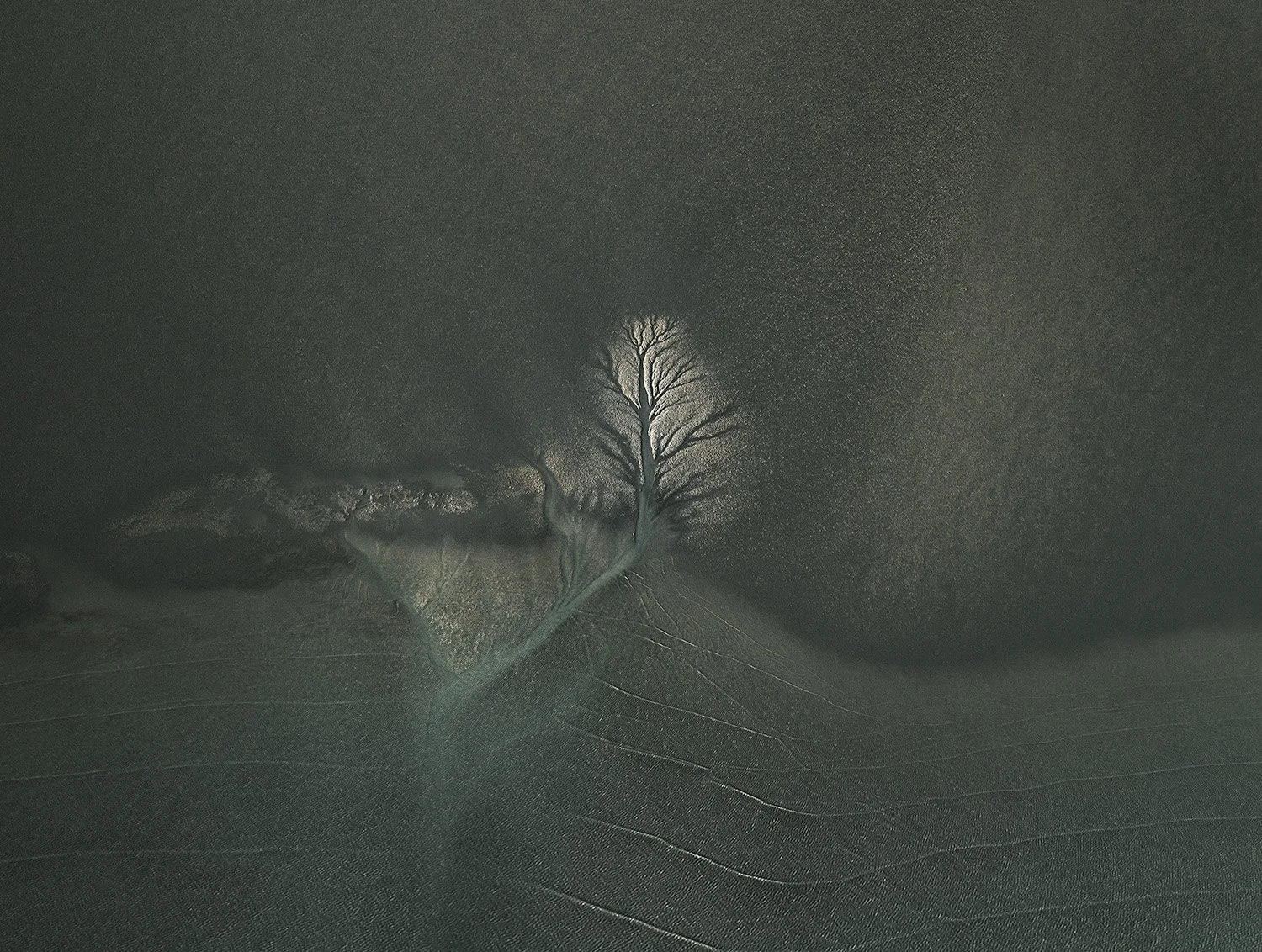
Brigitte Bourger explores literal estuaries, where shifting water and submerged landscapes become repositories for accumulated time and the ecological histories of the flora and fauna inhabiting these fragile ecosystems. Ksenia Ivanova examines borders not simply as geopolitical divisions, but as psychological and emotional conditions that fracture communities, familial histories, and collective memory, revealing the uncertainty of places shaped by conflict and impermanence.
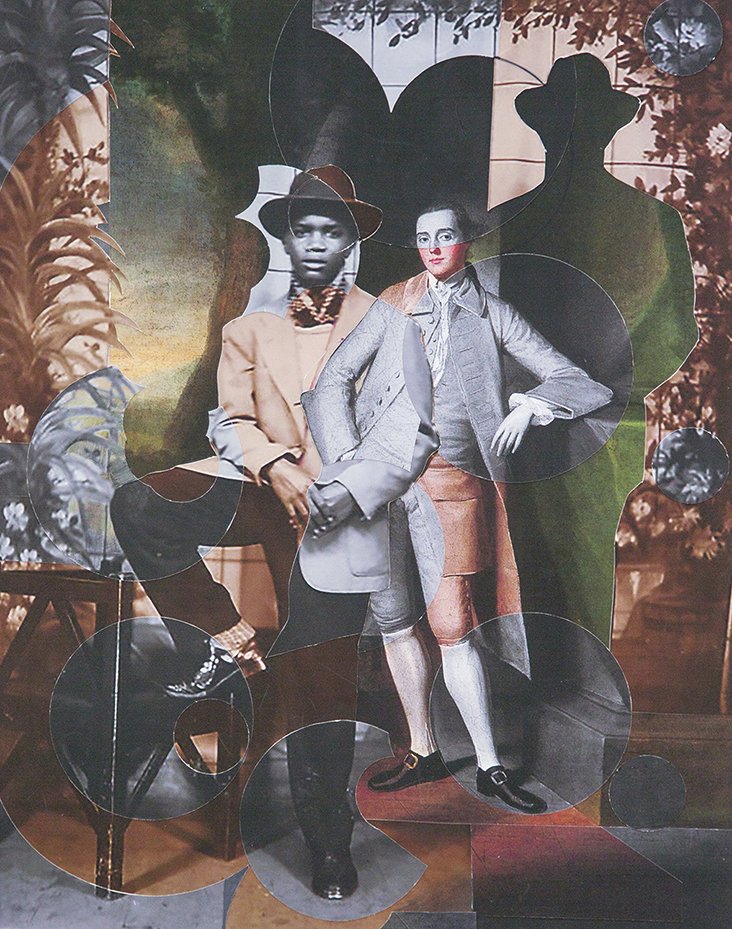
Luis Javier Maguiña’s Those Who Continue to be Named for The Aftermath Project inhabits the suspended space between mourning and justice, where personal grief exists alongside unresolved political violence and the lingering aftermath of state repression in Peru. Gary Burnley’s Stranger(s) in the Village, borrowing its title from James Baldwin’s seminal essay in Notes of a Native Son, merges disparate histories, races, and temporalities through collage, positioning Black identity within the unstable space between visibility and erasure, belonging and alienation.
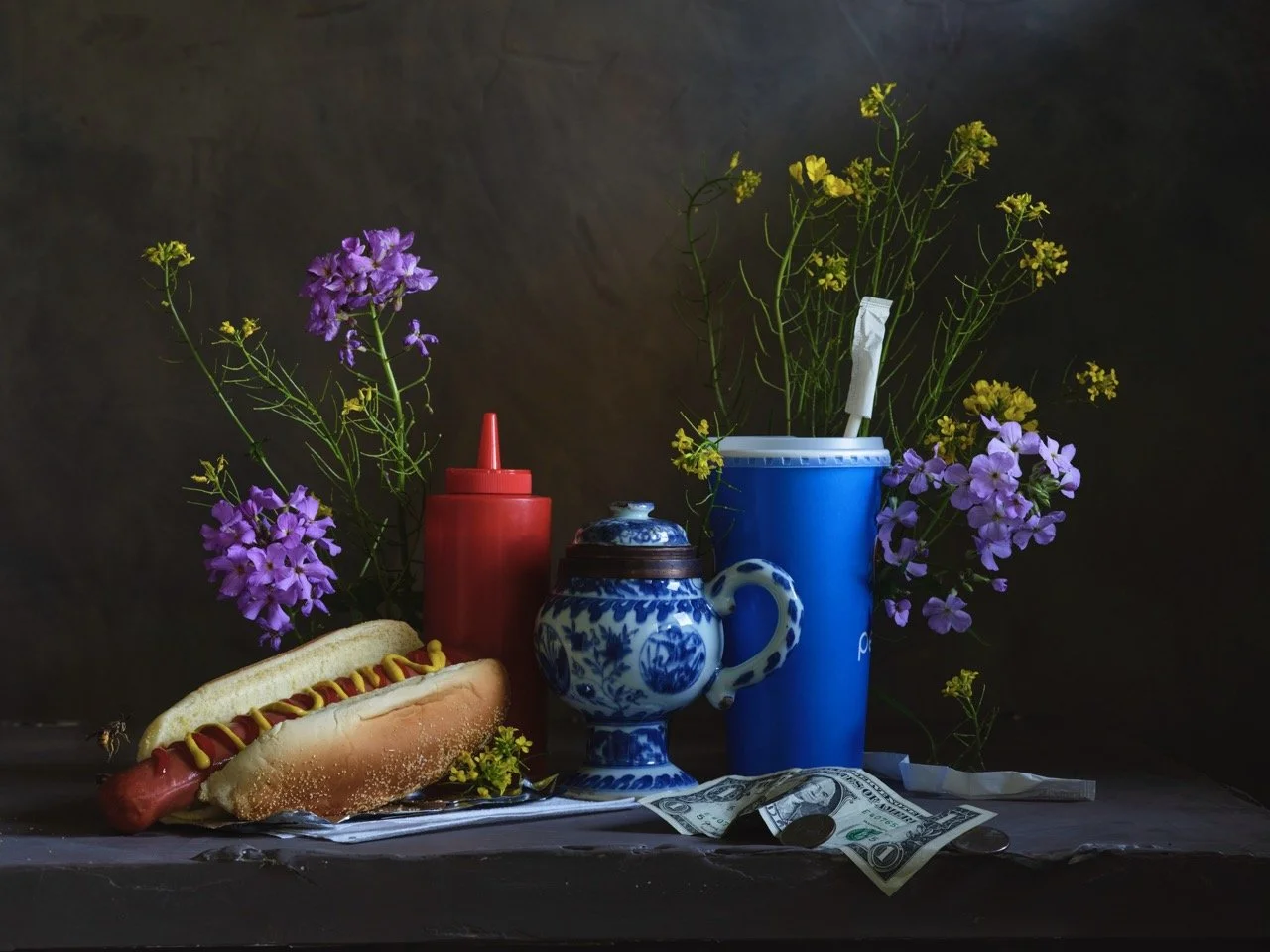
Ronit Porat uses archival imagery and collage to occupy the uncertain terrain between documentary evidence and constructed memory, where historical narratives remain fragmented and continually reinterpreted. Stephanie Shih examines in-betweenness through still life and food imagery that situate diasporic identity between inherited cultural histories and contemporary Asian American experience, revealing how everyday objects carry memory, belonging, and cultural inheritance.
Rather than offering resolution, In the Between embraces ambiguity as a generative condition. Across these works, landscapes, archives, portraits, and objects become sites where histories overlap, identities shift, and grief and renewal, rupture and connection, coexist in continual transformation.
-
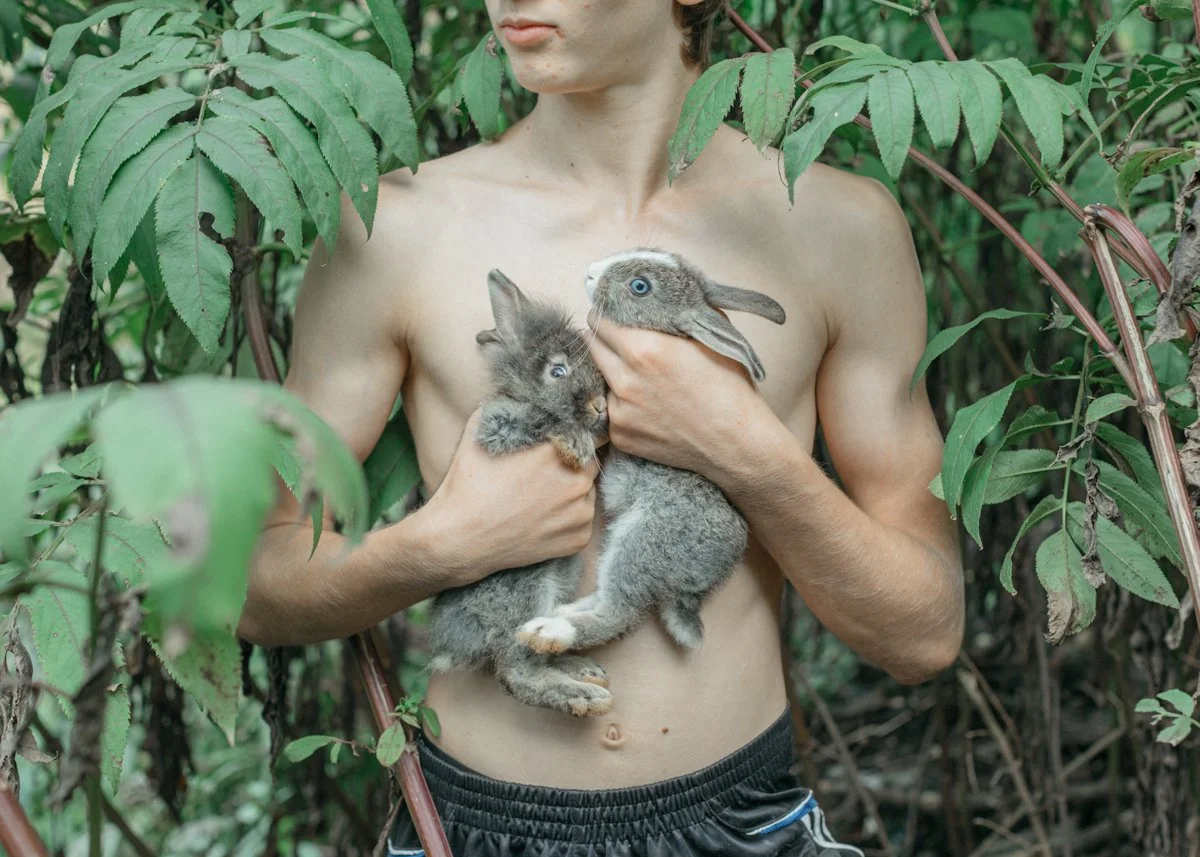
Stephanie Shih:
LONG TIME NO SEE delves into the complexities of the diasporic experience in America: presence/absence, integration/alienation, trauma/healing. The project mines the Asian export porcelain collection at the Museums at Washington and Lee University, drawing pieces from the 1600–1900s, concurrent with the first major waves of Asian American immigration and subsequent Chinese Exclusion Era. I directly intervene in the ongoing biographies of these export ceramics—themselves also members of the diaspora—and create layered conversations with archival materials, personal experiences, art and cultural histories, and the natural world around Virginia, where the ceramics now reside. Much of the diasporic experience involves grappling with the continued amputation of the context of our origins and cultures when we are perceived as “others” in American society. In weaving together historical and contemporary Asian American experiences, this project celebrates a transfer of narrative agency and power back to diasporic voices.
Stephanie Shih (史欣雲) is a photo-based multidisciplinary artist based in Los Angeles. Her work co-opts and recodes the symbolic systems of still life to investigate the construction of contemporary identity in the U.S. Through tracing the entangled lineages of diaspora culture in food and object histories, Shih excavates the inseparability of microcosmic, individual experiences from macrocosmic social forces across time. Shih has completed residencies at the Los Angeles County Museum of Art, Oak Spring Garden Foundation, Museums at Washington and Lee University, and Joshua Tree Highlands Artist Residency. Her recent exhibitions include commissioned work for the opening of the LACMA David Geffen Galleries and solo shows at Candela Photo Arts, Museums at Washington and Lee University, Los Angeles Center of Photography, and USC Pacific Asia Museum. Shih’s work has been featured in outlets including Lenscratch, Buzzfeed News, Gastronomica, Audubon Magazine, and Los Angeles Times.
Ronit Porat:
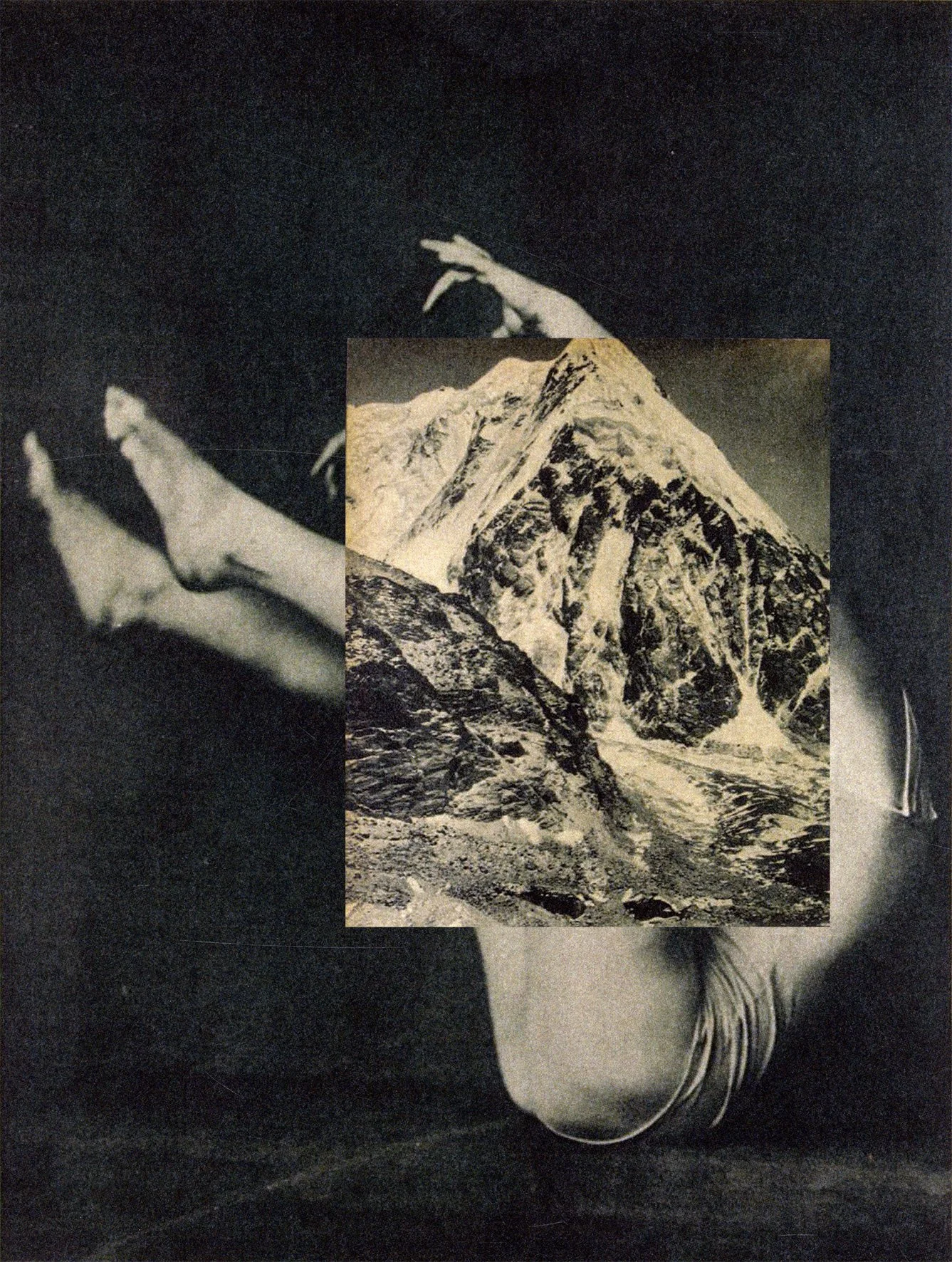
Ronit Porat creates archival narratives through collage, recontextualizing historical photographs to construct layered visual stories. Her practice focuses on the interwar period, particularly Weimar Germany, using history to reflect on the present. More recently, her research has expanded to include women artists, photography, psychoanalysis, and the intersections of personal and collective memory. Working exclusively with archival images, Porat employs collage, manual processes, and optical devices to question how photographs shape our understanding of history. Rather than following linear narratives, her works create atmospheric encounters where history, memory, and fiction coexist. Stereoscopic imagery and recurring motifs of birds introduce ambiguity, movement, and distance, while resisting fixed identities and singular interpretations. At the core of her practice is an investigation into photography itself. She explores themes of voyeurism, documentation, patriarchy, and sexuality, asking a central question: who owns a photograph—the photographer, the subject, the archivist, or the viewer?
Ronit Porat (b. 1975) lives and works in Israel and Amsterdam. Porat is a multidisciplinary artist whose practice centers on photography, archival materials, and intricate collage. Rather than working as a traditional photographer, she recontextualizes historical and found images to explore themes of voyeurism, gender, and the ways the past shapes collective memory. Her work has been exhibited at, among other venues, the Museum der Moderne Salzburg; Museum of Photography, Berlin; August Macke House Museum, Bonn; City Museum, Cologne; Museum Van Loon, Amsterdam; Tel Aviv Museum of Art; Haifa Museum of Art; Herzliya Museum of Contemporary Art; Sommer Salon, Zurich; Baudoin Lebon Gallery, Paris; Asymetria Gallery, Warsaw; Circle 1 Gallery, Berlin; Sabot Gallery, Cluj; Galerie der Stadt Wels, Austria; Indie Gallery, Tel Aviv–Jaffa; and Roja Art Lab, Latvia. Porat has received numerous awards and grants, including the Shpilman Fellowship, Photography Department, The Israel Museum, Jerusalem (2025); Plumas Art Foundation Grant (2024); Lauren and Mitchell Presser Photography Award, Tel Aviv Museum of Art (2017); Artis Grants for projects and exhibitions (2016, 2023); the Visual Arts Award from the Israeli Ministry of Culture and Sport (2022); the Creative Encouragement Award from the Israeli Ministry of Culture and Sport (2013); and the Yehoshua Rabinovich Foundation for the Arts Grant (2008). She was also an artist-in-residence at Artport (2012–2013) and the Jackman Goldwasser Residency at the Hyde Park Art Center, Chicago (2017). Her publication Hunting in Time was nominated for the Aperture First PhotoBook Award in 2023. Porat holds an MFA (2006) from Chelsea College of Art and Design, London, and a B.A. (2022) from the Jerusalem Multidisciplinary College. She is a founding member of Indie, a collaborative photography gallery.
Ksenia Ivanova:
A subtropical paradise of lush forests and Black Sea coastline—this stunning limbo is the reality of Abkhazia, a Georgian territory recognized by the majority of countries as occupied by Russia. Behind the scenic beauty lies a silent, decades-long conflict, leaving hundreds of thousands of displaced Georgians unable to return home. Between the Trees explores the ways long-term severance quietly transforms landscapes and local communities. The project maps the official structures of control and everyday forms of survival on both sides of the border, capturing its profound impact on the younger generation. Documenting a world of isolation and dependency, the work exposes how outside power rewrites geography, erases identity, and controls human lives.
Ksenia Ivanova is a Berlin-based visual artist with a background in documentary photography and a member of the Women Photograph collective. Her practice investigates the long-term aftermath of trauma, built upon years of immersive engagement with the communities she depicts. Her acclaimed series Between the Trees won the Lucie Foundation Documentary Scholarship and was named a finalist for the Leica Oskar Barnack Award, the Gomma Grant, and the Women Photograph Project Grant, among other accolades. Nominated as a FUTURES Talent by the Deichtorhallen Hamburg museum, Ivanova has exhibited extensively across Europe, including a solo show at Leica Gallery. Her prints are held in private collections internationally, and her independent work has been featured in The Washington Post, Courrier International, XXI revue, and Der Spiegel.
Gary Burnley:
Our vision is filtered through personal experience and history. Growing up Black in America, contradiction demarcates how I am seen as well as how I see others. I think of being an artist as a way to identify and diagnose the paradox lurking just outside my frame of reference. The images I make are a way of addressing those dualities. I begin with misfit pieces of cultural vernacular, images that seemingly do not share the same heritage, meaning or purpose. A snapshot from a family album, for example, placed alongside an admired example of historical European or American portraiture. Through collage, alteration, recombination, the sharing of different lens, time, territory, pedigree, the two images are forced to amalgamate, to cohabitate, to live in each other’s world. Untethered from cultural frameworks, one consequence is the retort that ensues, the conversation between images. It is that dialog I find most interesting.
Gary Burnley (b. Saint Louis, Missouri) creates collages that reconfigure historical models of identity, beauty and social status from divergent visual fragments whose previous structure, meaning and historical importance, though no longer fully in tack, still live in the mind of the viewer. His amalgamations shift the reading of familiar narratives and generally accepted interpretations towards the discovery of what could not otherwise have been anticipated. BFA Washington University in Saint Louis, MFA, Yale University School of Art. A 2022 recipient of the John Simon Guggenheim Memorial Fellowship and The Aftermath Project Finalist Grant, his work is part of museum and private collections including the Museum of Fine Arts Houston, Houston, TX, Amarillo Museum of Art, Amarillo, TX, Virginia Museum of Fine Arts, Richmond, VA, Light Work Collection, Syracuse, NY, Candela Collection, Richmond, VA, Hunter Museum of American Art, Chattanooga, TN., Lehigh University, Bethlehem, PA, Bard College, Annandale-on-Hudson, NY, Weatherspoon Art Museum, University of North Carolina, Charlotte, NC.
Luis Javier Maguiña:
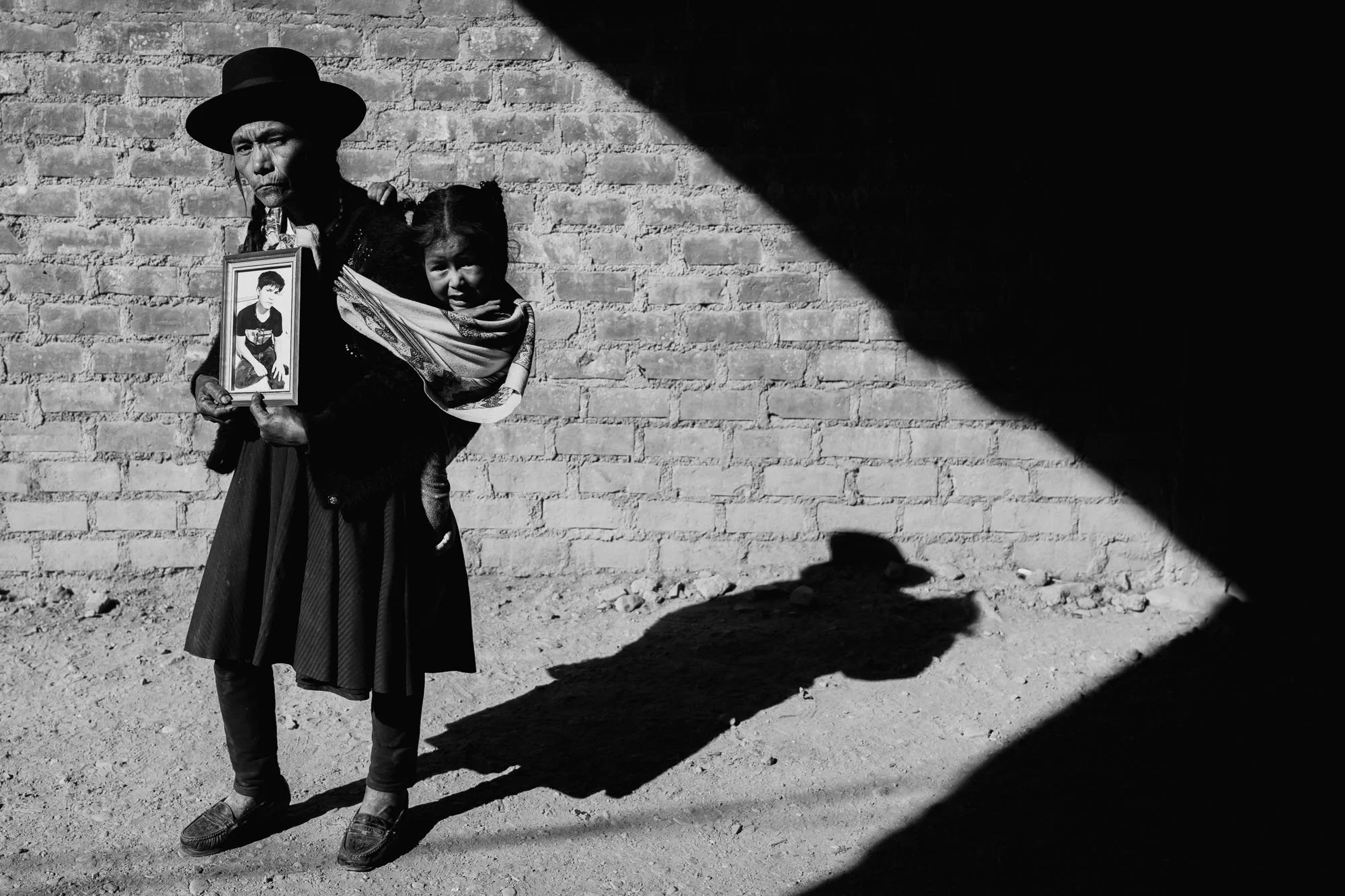
Los que se siguen nombrando es un proyecto documental que surge a partir de las protestas ocurridas en el Perú entre 2022 y 2023. A través de un acompañamiento prolongado a las familias de quienes perdieron la vida durante la represión estatal, el proyecto explora las formas en que el duelo colectivo se transforma y permanece con el paso del tiempo.
Las fotografías transitan por habitaciones que permanecen intactas, prendas de vestir, altares familiares, paisajes atravesados por la ausencia, viajes hacia los lugares donde ocurrieron los hechos y conmemoraciones impulsadas por madres, padres, hermanos e hijos que continúan nombrando a quienes ya no están. Más que documentar la pérdida, el proyecto busca comprender cómo la memoria se sostiene a través de los gestos cotidianos y cómo estos se convierten en una forma de resistir al olvido.
Desde la fotografía documental, el proyecto reflexiona sobre la permanencia de los vínculos afectivos después de la violencia y sobre la manera en que los espacios, los objetos y los rituales mantienen viva la presencia de quienes siguen habitando la memoria de sus familias y comunidades.
Luis Javier Maguiña (Huaraz, Ancash, Peru) is a documentary photographer and audiovisual communicator who graduated from the Pontifical Catholic University of Peru (PUCP). His work emerges from his experience of migration between the Peruvian Andes and Lima. Situated at the intersection of culture, memory, and territory, his practice addresses themes such as political violence, collective mourning, structural inequality, and the climate crisis. Through his projects, he reflects on the emotional and historical traces that shape communities and the places they inhabit.
Through long-term engagement, he has developed visual research projects in rural and urban communities across Peru. He has documented social protests and memory processes in Ayacucho, Andahuaylas, Cusco, Juliaca, and Lima, focusing on the human consequences of political violence and on the ways families preserve the memory of their loved ones. His work has been published by Reuters, El País, OjoPúblico, IDL-Reporteros, and Salud con Lupa. In 2024, he was nominated for the Gabo Award and the Joop Swart Masterclass by World Press Photo. In 2026, he was a finalist for the Gabo Award and is participating in the group exhibition In the Between at the Houston Center for Photography. He is currently developing documentary projects exploring memory, identity, and territory.
Brigitte Bourger:
Untethered: I am drawn to the aerial view precisely when it loses its horizon. Without that line to orient the eye, every reference point dissolves; up and down, near and far, land and water no longer occupy their expected places. What remains is abstract in appearance, yet rooted in the real. Nothing is arranged or invented. Seen from above, coastlines and tidal zones become fluid expressions of light and texture, shaped by natural forces. This is the threshold that interests me most: the moment a landscape stops being read as landscape, and becomes something in between, a surface where recognition and abstraction meet.
Brigitte Bourger is a fine art photographer based in French Polynesia. Her book Éphémères Impressions received a Gold Medal at PX3 Paris and First Prize at TIFA Tokyo. She was recently exhibited at A Smith Gallery (Texas) and LightBox Gallery (Oregon).
About the Artists:
Stephanie Shih, Ronit Porat, Ksenia Ivanova, Gary Burnley, Luis Javier Maguiña, and Brigitte Bourger
Questions?
For questions about this exhibition, please contact
Exhibitions and Programs Coordinator at exhibits@hcponline.org or 713-529-4755, ext 106.