THE VANGUARD
featuring the work of
20 trailblazing women who exhibited at HCP within its first 20 years
March 12 - May 24, 2026
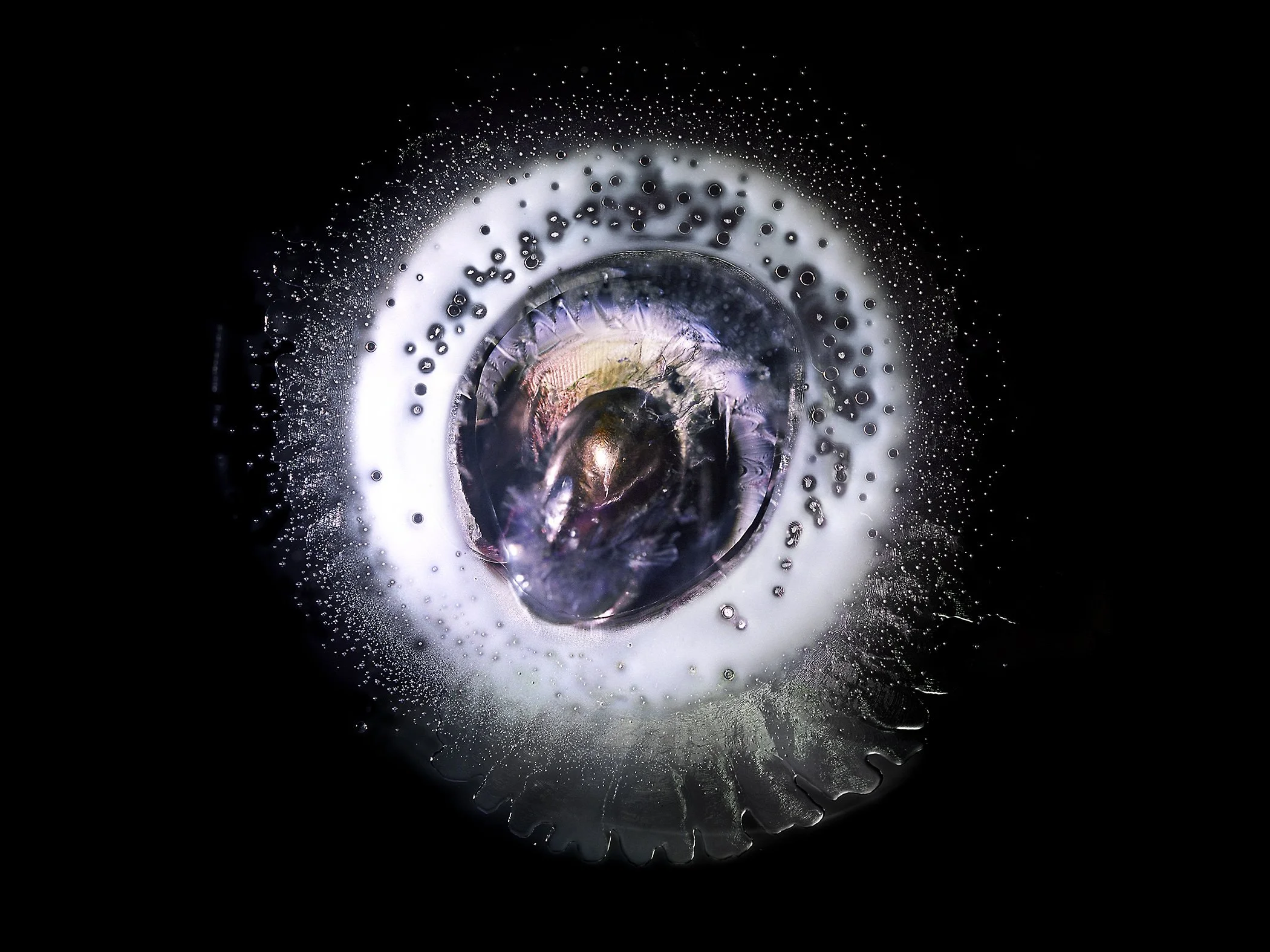
© Deborah Bay
Artist Panel Conversation
Thursday, March 12, 2026 from 5:30 - 6:15 PM
Opening Reception
Thursday, March 12, 2026 from 6:15 - 8:00 PM
Curatorial Exhibition Walkthrough
Saturday, May 2, 2026 from 10:30 AM - 11:30 AM
—
El inicio de 2026 marcó el 45.º aniversario del Houston Center for Photography. Como Directora Ejecutiva y Curadora, la curaduría de la exposición colectiva LA VANGUARDIA fue profundamente personal y especialmente oportuna. Me integré a HCP en 2023, aunque conocía la institución desde mis años de posgrado (1998–2000), primero a través de su antigua publicación SPOT y más adelante siguiendo las trayectorias curatoriales de anteriores Directoras Ejecutivas y Curadoras, Madeline Yale Preston y Bevin Bering Dubrowski. Mucho antes de asumir mi actual labor al frente de la institución, HCP ya formaba parte de mi horizonte profesional.
No sólo muchas de las personas fundadoras de HCP fueron mujeres, sino que, al tratarse de una organización gestionada por sus miembros, éstas tuvieron una voz real en la configuración del rumbo inicial del centro. Si a esto se suma el liderazgo extraordinario de la reconocida Anne Wilkes Tucker, quien participó de manera estrecha en las decisiones curatoriales durante los primeros años de HCP, resulta claro por qué la institución se consolidó como pionera entre los centros de fotografía al impulsar el trabajo de mujeres en un momento en que el medio celebraba mayoritariamente a creadores hombres.
HCP fue fundamental para darme a conocer a una amplia variedad de fotógrafas en un momento en que durante mi formación académica formal se les había pasado por alto. En 2001, cuando HCP celebraba su 20.º aniversario, me encontraba al inicio de mi carrera profesional en el ámbito académico y comprendí que ese era un momento decisivo para contribuir a corregir estas omisiones institucionales. Al procurar que estudiantes y artistas emergentes tuvieran la oportunidad de conocer y sentirse inspirados por mujeres extraordinarias en el campo de la fotografía, el legado perdurable de HCP ya se manifestaba en mi trayectoria mucho antes de que llegara a Houston. Años más tarde, comprendería hasta qué punto ese legado había moldeado mi propio camino, conduciendo finalmente a HCP.
¿Qué mejor manera de celebrar este legado y conmemorar nuestro 45.º aniversario que reconociendo a quienes lo iniciaron todo, tanto para HCP como para mí? La curaduría de LA VANGUARDIA ha sido un recorrido enriquecedor por los archivos de HCP. Tras revisar a las cientos de mujeres que expusieron durante los primeros 20 años de la historia del centro, finalmente seleccioné a 20 artistas para la exposición. Cada una pertenece a una de tres categorías curatoriales: artistas que conocí a principios de los años 2000 gracias a HCP, artistas con quienes he tenido el honor de mantener una relación curatorial, y artistas que descubrí al llegar a Houston y a quienes lamento no haber conocido antes.
Con estas categorías como marco, acompañé cada obra con una anécdota personal en cédulas extendidas, invitando al público a acercarse tanto a las prácticas de las artistas como a mi propio recorrido junto a HCP.
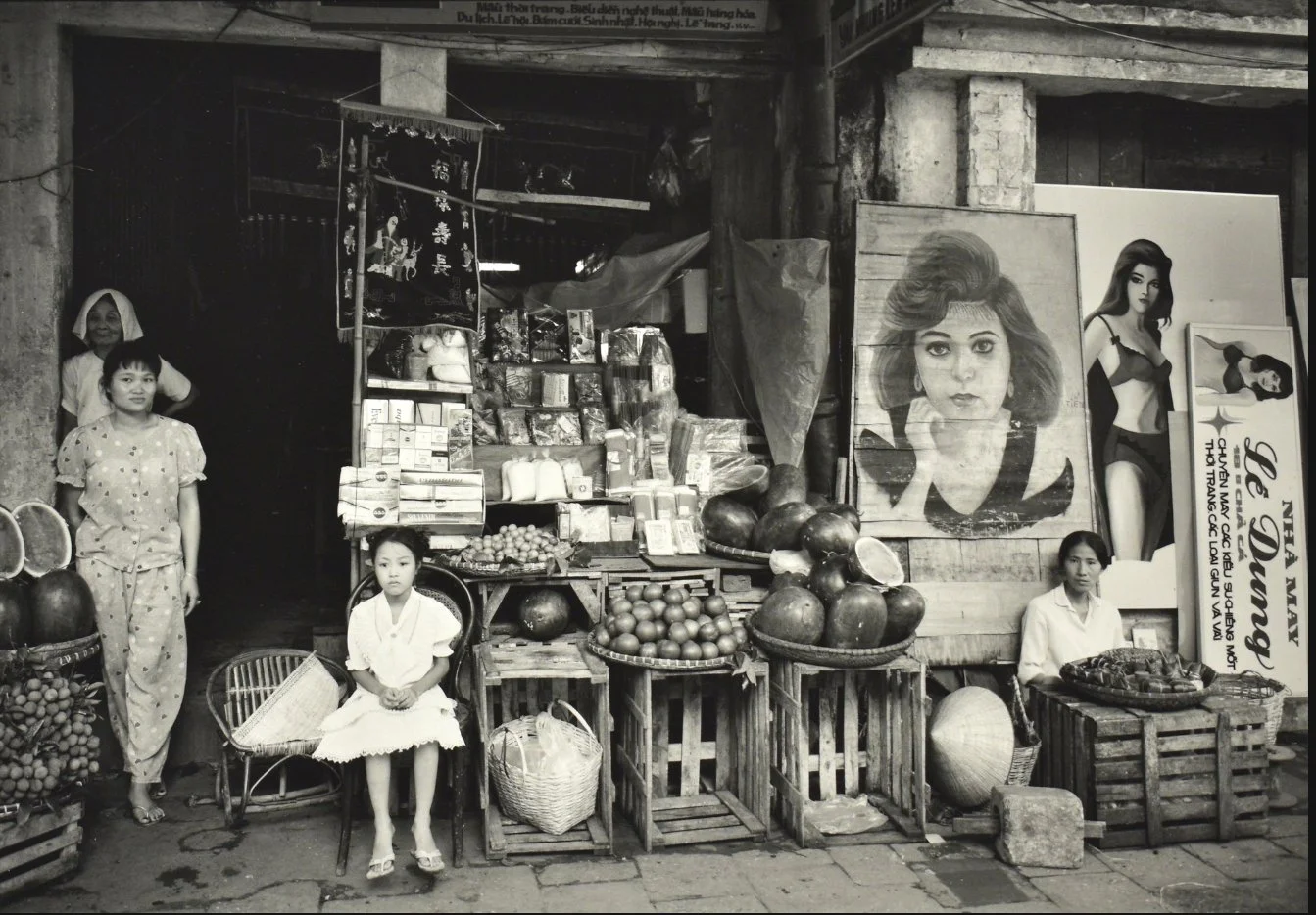
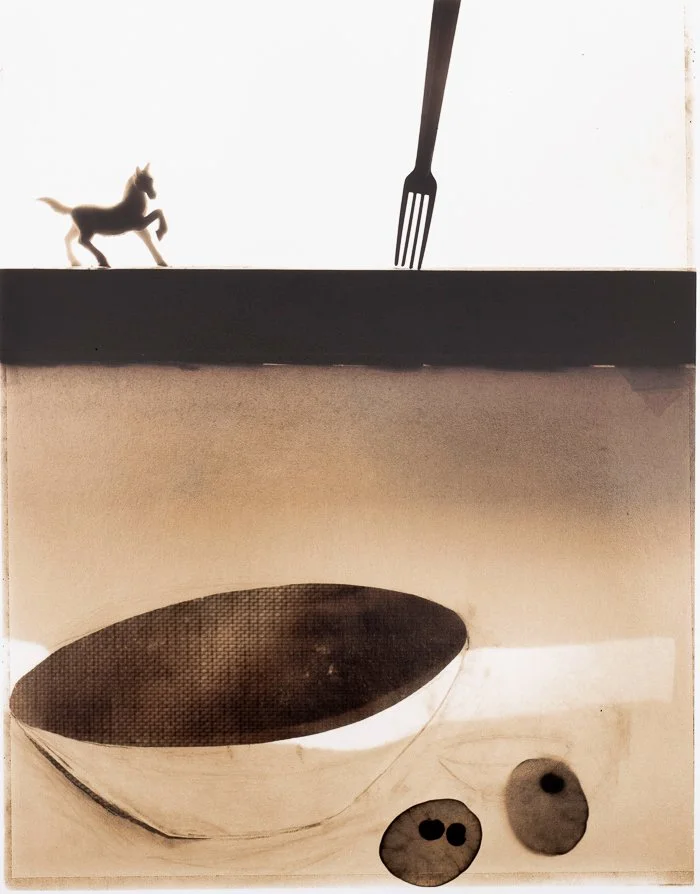
LA VANGUARDIA incluye a: Yolanda Andrade, Bennie Flores Ansell, Deborah Bay, Gay Block, Carol Crow, Dornith Doherty, Susan Dunkerley Maguire, Melanie Friend, Susan kae Grant, Mary Margaret Hansen / Patsy Cravens, Graciela Iturbide, Priya Kambli, Jean Karotkin, An-My Lê, Annu Palakunnathu Matthew, Kenda North, Aline Smithson, Maggie Taylor, Wendy Watriss, and Carrie Mae Weems.
The start of 2026 marked the Houston Center for Photography's 45th anniversary. As Executive Director and Curator, curating the group exhibition THE VANGUARD was deeply personal and especially timely. I joined HCP in 2023, having known the organization since my time in graduate school (1998–2000). First through its former publication SPOT, and later by following the curatorial careers of previous Executive Directors and Curators Madeline Yale Preston and Bevin Bering Dubrowski, HCP was on my radar long before I came to my present stewardship of it.
Not only were many of HCP’s founding members women, but as a member-run organization, they had meaningful voices in shaping the center’s early direction. Add to this the extraordinary leadership of the esteemed Anne Wilkes Tucker, who was deeply involved in curatorial decisions during HCP’s earliest years, and it is clear why HCP became a pioneer among photo centers.
HCP was instrumental in introducing me to a wide array of women photographers at a time when my formal education had overlooked them. In 2001, as HCP was turning 20, I found myself on the precipice of my professional career in academia and realized this was the pivotal moment for me to play a part in rectifying these institutional erasures. By ensuring that students and emerging artists had the opportunity to encounter and be inspired by extraordinary women in the field of photography, HCP's enduring legacy moved through me long before I ever set foot in Houston. Years later, I would come to understand how profoundly that legacy has shaped my own trajectory, eventually leading me to HCP.
What better way to celebrate this legacy and mark our 45th anniversary than by acknowledging the very people who started it all—both for HCP and for myself. Curating THE VANGUARD has been a rich journey through HCP’s archives. After sifting through hundreds of women exhibited during the center’s first 20 years, I ultimately selected 20 artists for the exhibition. Each woman falls into one of three curatorial categories: artists I discovered in the early 2000s thanks to HCP, artists with whom I have had the honor of sharing a curatorial relationship, and artists I encountered upon arriving in Houston whom I regretted not knowing sooner.
With these categories in mind, I have paired each work with a personal anecdote on extended wall labels, inviting viewers to engage with both the artists’ practices and my own journey with HCP.
THE VANGUARD includes: Yolanda Andrade, Bennie Flores Ansell, Deborah Bay, Gay Block, Carol Crow, Dornith Doherty, Susan Dunkerley Maguire, Melanie Friend, Susan kae Grant, Mary Margaret Hansen / Patsy Cravens, Graciela Iturbide, Priya Kambli, Jean Karotkin, An-My Lê, Annu Palakunnathu Matthew, Kenda North, Aline Smithson, Maggie Taylor, Wendy Watriss, and Carrie Mae Weems.

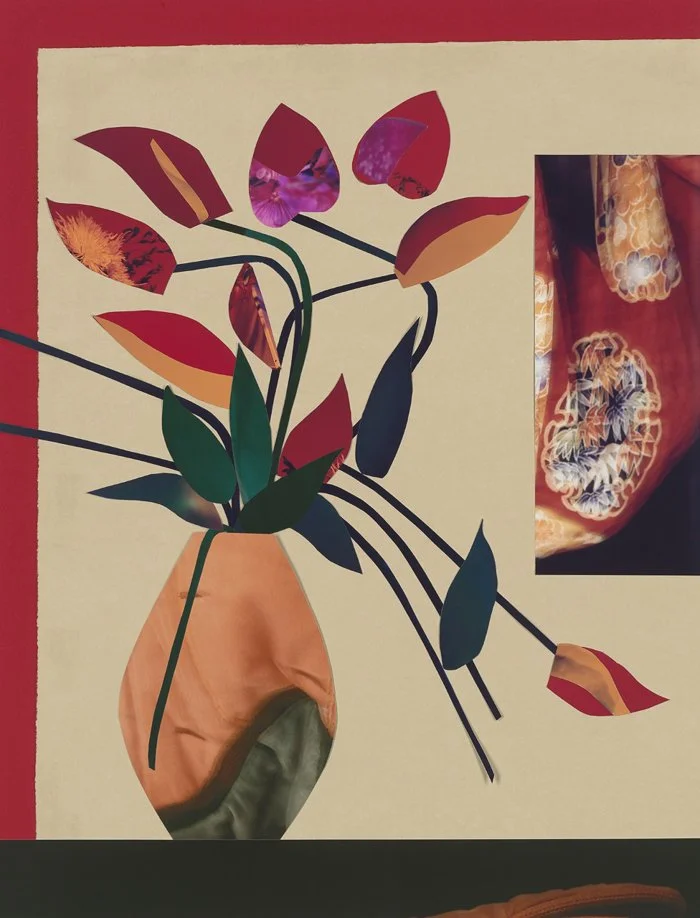
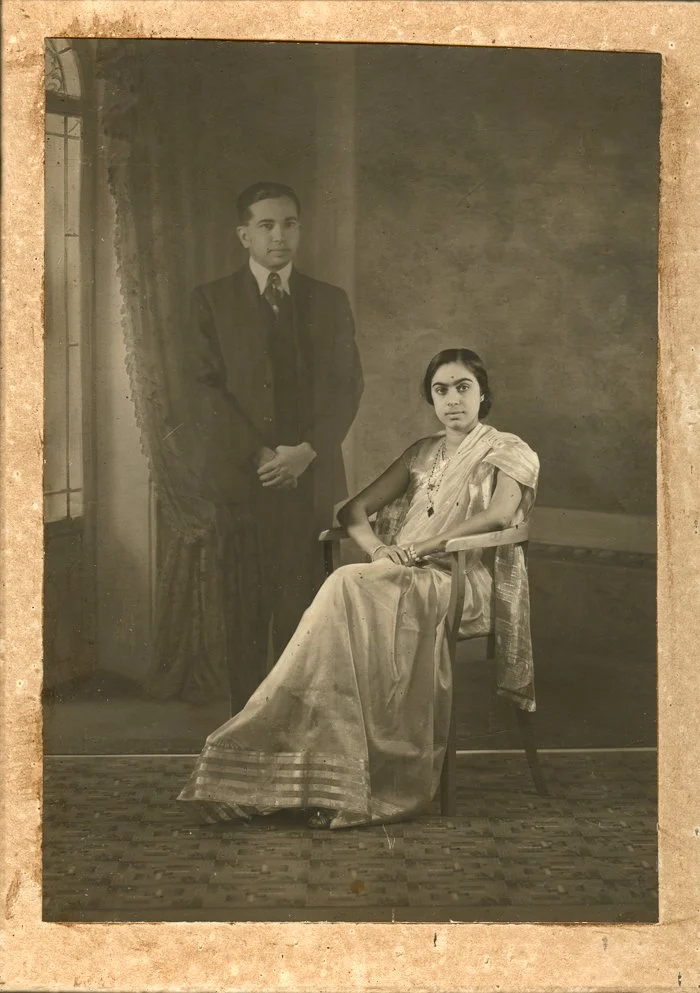
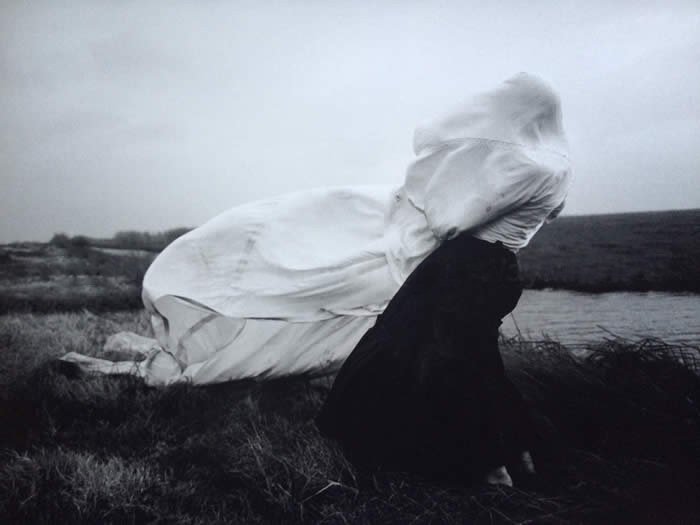
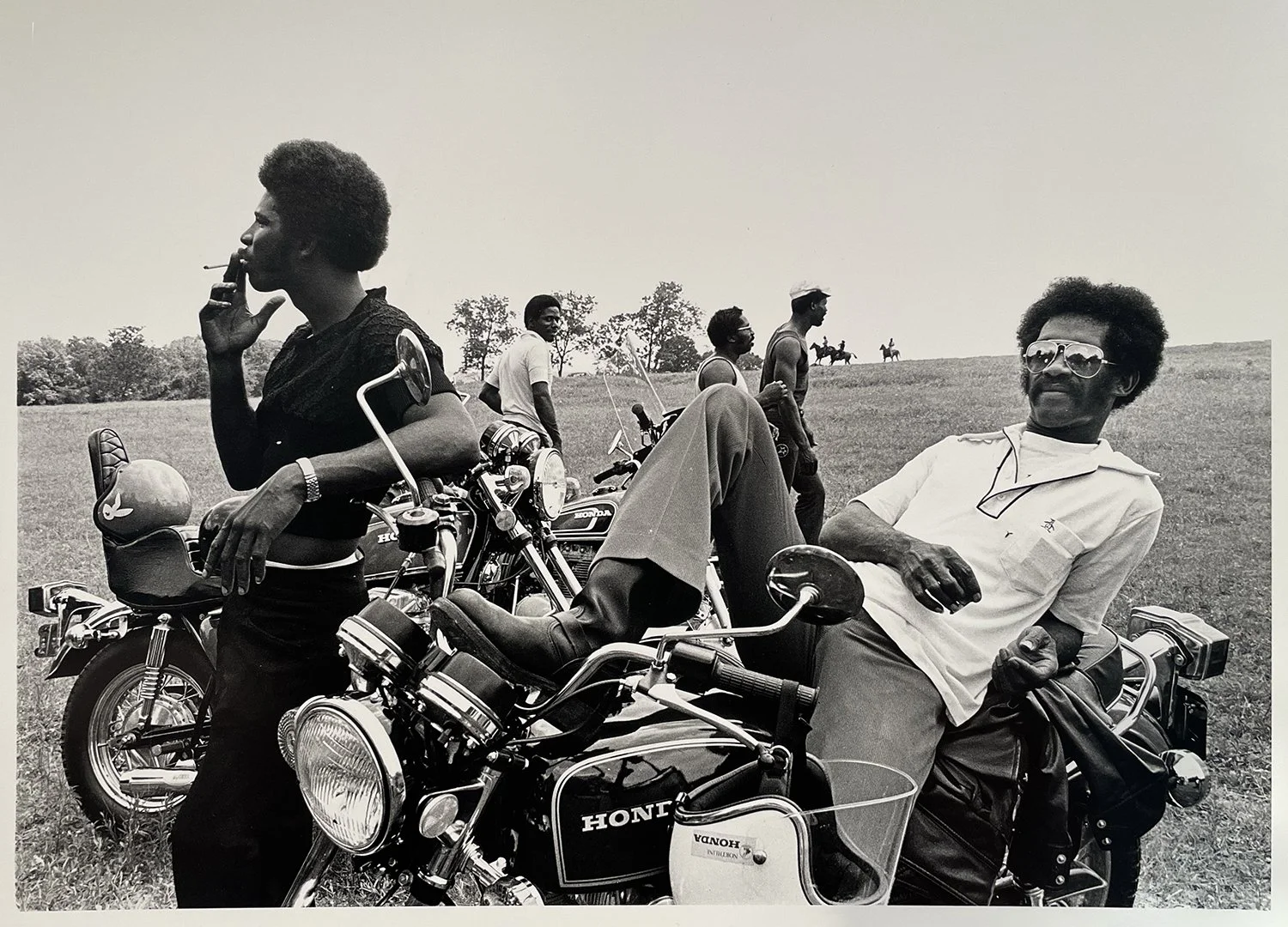
About the Artists:
Yolanda Andrade, Bennie Flores Ansell, Deborah Bay, Gay Block, Carol Crow, Dornith Doherty, Susan Dunkerley, Melanie Friend, Susan kae Grant, Mary Margaret Hansen / Patsy Cravens, Graciela Iturbide, Priya Kambli, Jean Karotkin, An-My Lê, Annu Palakunnathu Matthew, Kenda North, Aline Smithson, Maggie Taylor, Wendy Watriss, and Carrie Mae Weems
Yolanda Andrade:
Two elements have been fundamental in my photographic work, art and popular culture, both black and white and color. For 27 years I worked with black and white film, time in which I walked the streets of Mexico City to make a project on the different manifestations of social, political and popular culture, from a personal point of view. The result of this project was the publication of two books: Los velos transparentes / Las transparencias veladas (1988), and Pasión mexicana/Mexican Passion (2002). In 2003 I started taking pictures with a digital camera and incorporating color into the images. This experience made me learn a new technique, to visualize my photos in a different way and also to structure them into sequences in a different way than I did in black and white. In my most recent work I have been investigating the relationship between color and popular culture and the influence of the latter on expressions of high art. I have been interested in the changes that various disciplines such as painting, cinema, literature, as well as mass media, exert on the manifestations of popular culture. Since then, I have been exploring various themes, not only in Mexico City, but also in the urban space of other countries.
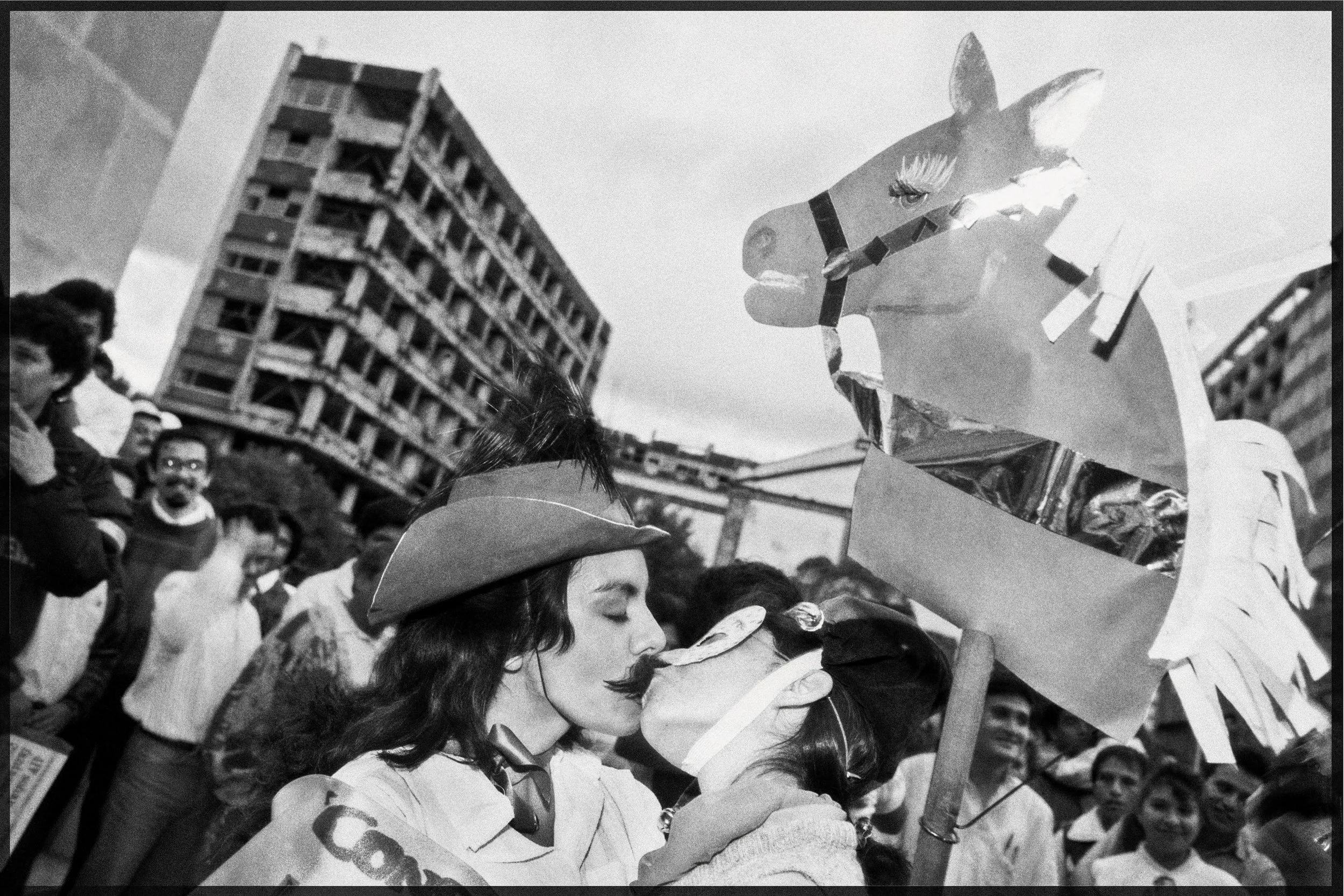
Yolanda Andrade (born May 22, 1950, Villahermosa, Tabasco, Mexico) is a Mexican photographer whose work explores popular culture, urban space, and visual memory through both black-and-white and color photography. She studied photography at the Visual Studies Workshop in Rochester, New York, and has developed a sustained international practice since the late 1970s. In 1994, she received a John Simon Guggenheim Memorial Foundation Fellowship to pursue a photographic project on Mexico City. Andrade has participated in artist residencies in the United States and has been invited to speak at major institutions and conferences addressing Latin American photography. She is the author of numerous photo books and limited-edition publications that reflect her long-term engagement with travel, architecture, and visual storytelling. Her photographs are held in major public and private collections across the Americas, Europe, and Asia, including leading museums and universities. Andrade continues to exhibit internationally and remains a vital voice in contemporary photography.
Bennie Flores Ansell:
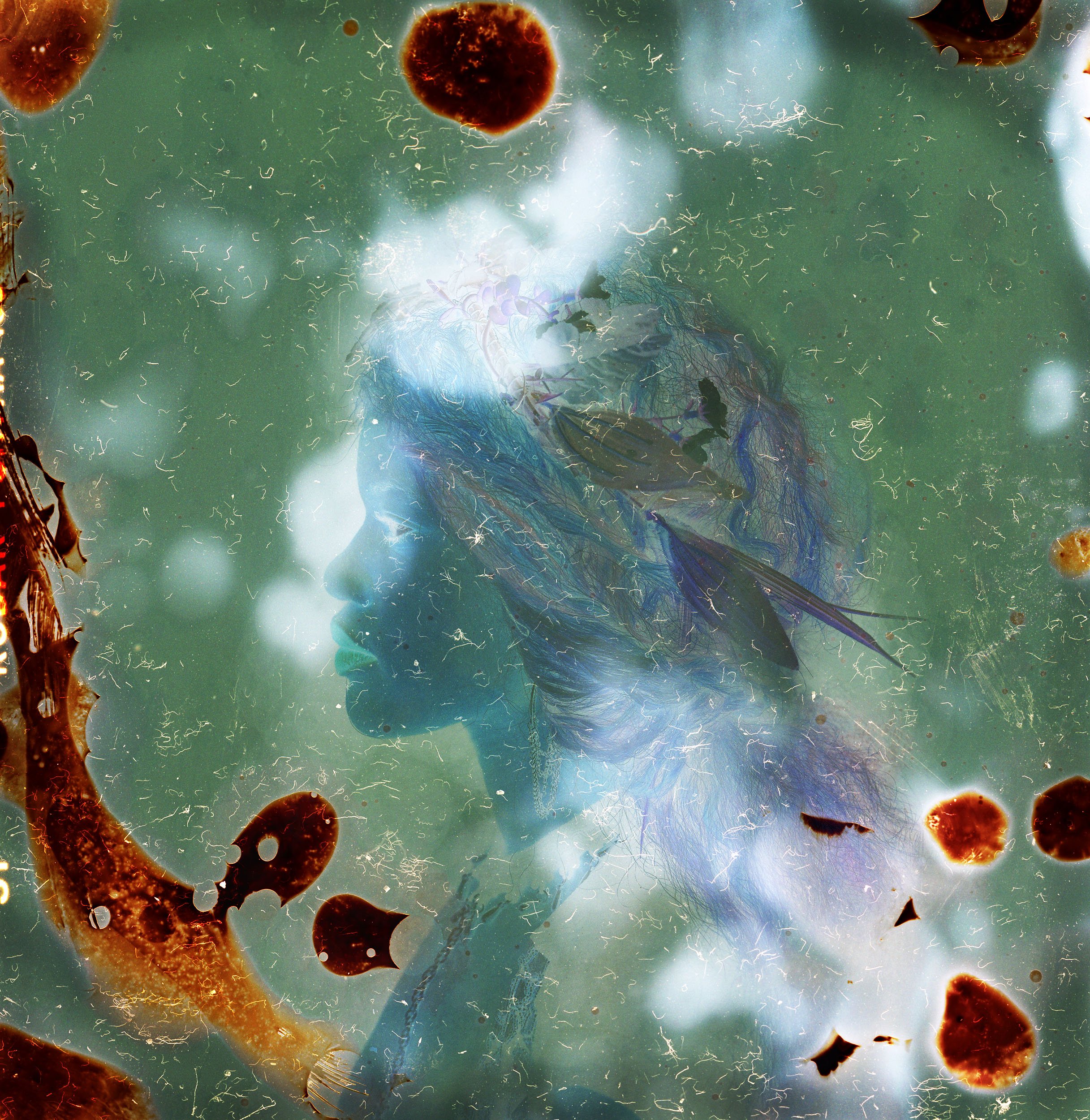
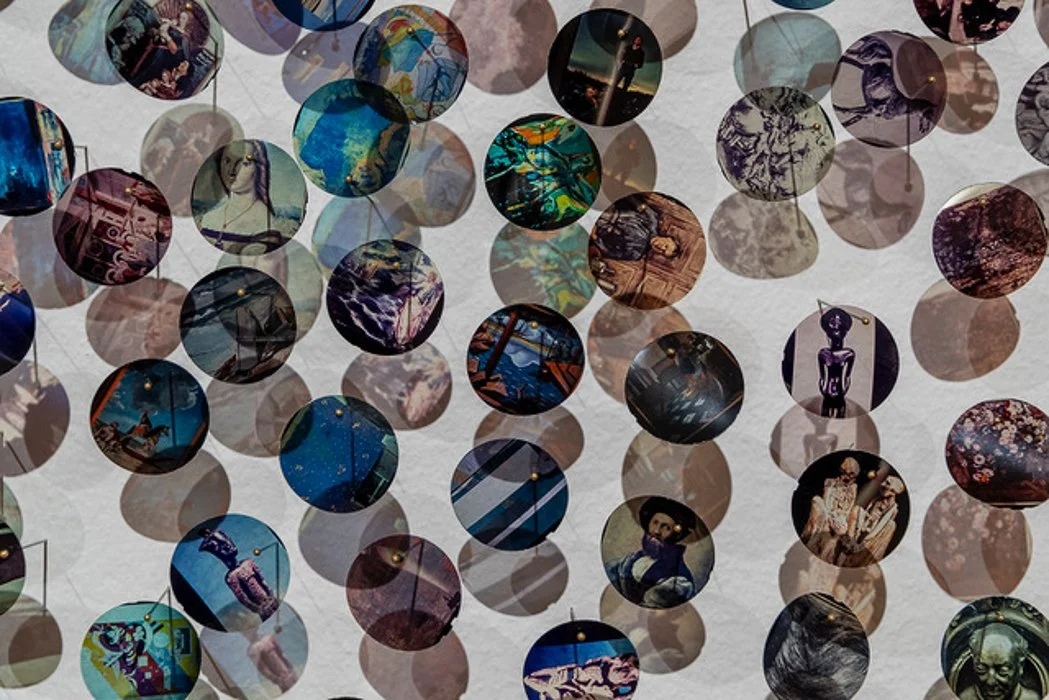
Migration is not merely the movement of bodies across borders; it is also the movement of images, memories, and histories across time. Migration can also be a profound journey of identity, resilience, and transformation. In my 1 dpi ( 1 dot per inch) body of work, I explore migration through the material language of photography itself, using discarded art history slide film as both subject and structure. These slides—once used to transmit canonical images in classrooms—become carriers of cultural memory, fragments of a visual archive that has traveled, circulated, and degraded over decades. By enlarging these single slides to be part of a larger migration form, I strip the images of their original clarity and authority. What remains is not representation, but residue: fields of color, light, and abstraction that speak to loss, translation, and the instability of meaning. The images migrate from legible documents into ambiguous surfaces, echoing how histories are continually reshaped through movement, repetition, and displacement. As a photographer, I approach these installations as expanded photographs—frozen moments of light that no longer depict a single place or time, but instead embody the act of transmission itself. The work treats migration as an optical and archival process: how images travel, how knowledge is reproduced, and how cultural narratives shift as they are copied, projected, and recontextualized. The 1 dpi works operate as quiet monuments to visual circulation and erasure. They invite viewers to consider migration not only as a human condition, but as a condition of images—how meaning drifts, dissolves, and reforms as it moves through systems of education, technology, and memory. Through this work, I frame migration as a process of transformation embedded within photography itself: a slow passage from image to trace, from documentation to light.
Bennie Flores Ansell is a Houston-based artist whose work delves into the interplay of light projections, sculpture, and installation to explore themes of migration, flight, and drawing with light. She holds an M.F.A. in Photography from the University of Houston and a B.A. in Photography from the University of South Florida. Flores Ansell has been recognized with an American Photography Institute Fellowship at New York University and has participated in notable residencies, including the Asia Society Museum in Houston and a collaborative residency between The Houston Center for Photography and the Houston Center for Contemporary Craft. Her work has been exhibited both nationally and internationally, with notable shows at the International Center for Photography in New York, Festival De La Luz in Argentina, the Daegu Photography Biennale in South Korea, Uno Art Space in Stuttgart, Germany, and Patricia Conde Galeria in Mexico City. Her pieces are included in numerous public and private collections, with her most recent acquisition by the Southeast Museum of Photography. Additionally, her work is part of the Civic Art Collection of The City of Houston. In January 2023, her public art commission, Alief Swarm, was unveiled at The Alief Community Center.
Deborah Bay:
9mm Uzi II is an image from “The Big Bang” series, which developed as a visual exploration of the impact of projectiles fired into bullet-proof plexiglas. One of the most popular submachine guns of all time, the Uzi was designed for the Israeli military in the 1940s and later became a pop culture icon in film and art. The fragmented bullets, heat bubbles and other markings captured within the panels of hard plastic hint at the creation of new galaxies in the nether reaches of the universe. But an uncomfortable psychological tension also is created by the enigmatic quality of the shattered metal which draws the viewer in before the horror of its inherent destructiveness rises to consciousness. Although the work makes no overt statement about gun violence, it clearly depicts the immense amount of energy released by the bullet on impact, requiring little imagination to realize its effect on muscle and bone. Law enforcement professionals at the Public Safety Institute at Houston City College fired the shots into the plexiglas. The photographic images were made in the studio – well after the gunshots were fired.
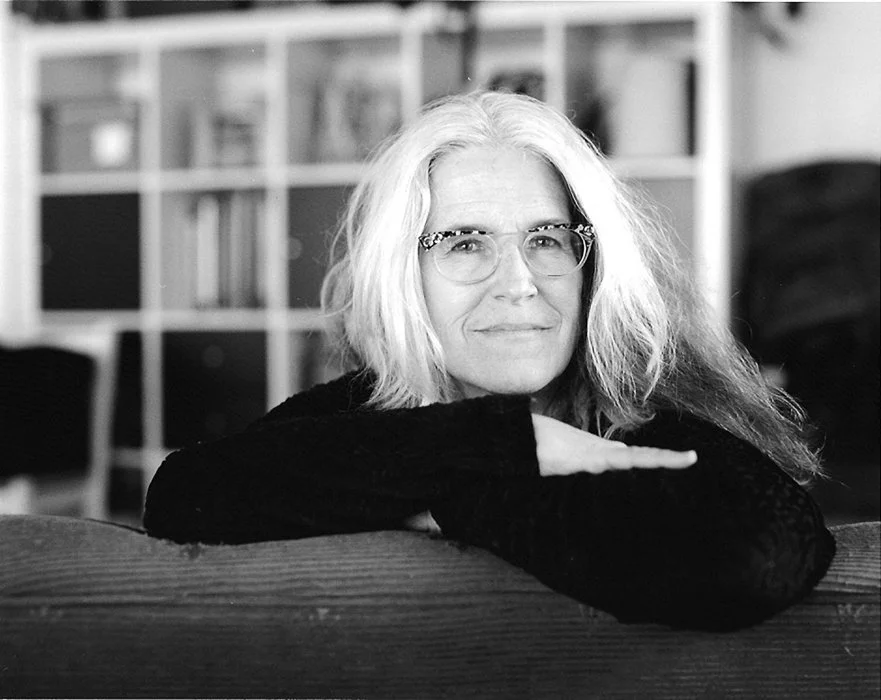
Deborah Bay is a Houston artist who specializes in constructed macro studio photography. She has exhibited throughout the United States, and her work is in a number of public and private collections, including the Museum of Fine Arts Houston, Center for Creative Photography at the University of Arizona in Tucson, Dorsky Museum of Art at State University of New York at New Paltz, M.D Anderson Cancer Center, Alamo Colleges District, Crown Castle and the Four Seasons (Chicago). Her work has been featured in international publications, and the British Journal of Photography published her work on its cover. An active member of the Houston arts community, she has served on the board of the Houston Center for Photography and its Advisory Council. She holds graduate and undergraduate degrees from The University of Texas at Austin and worked in public affairs prior to opening her studio.
Gay Block:
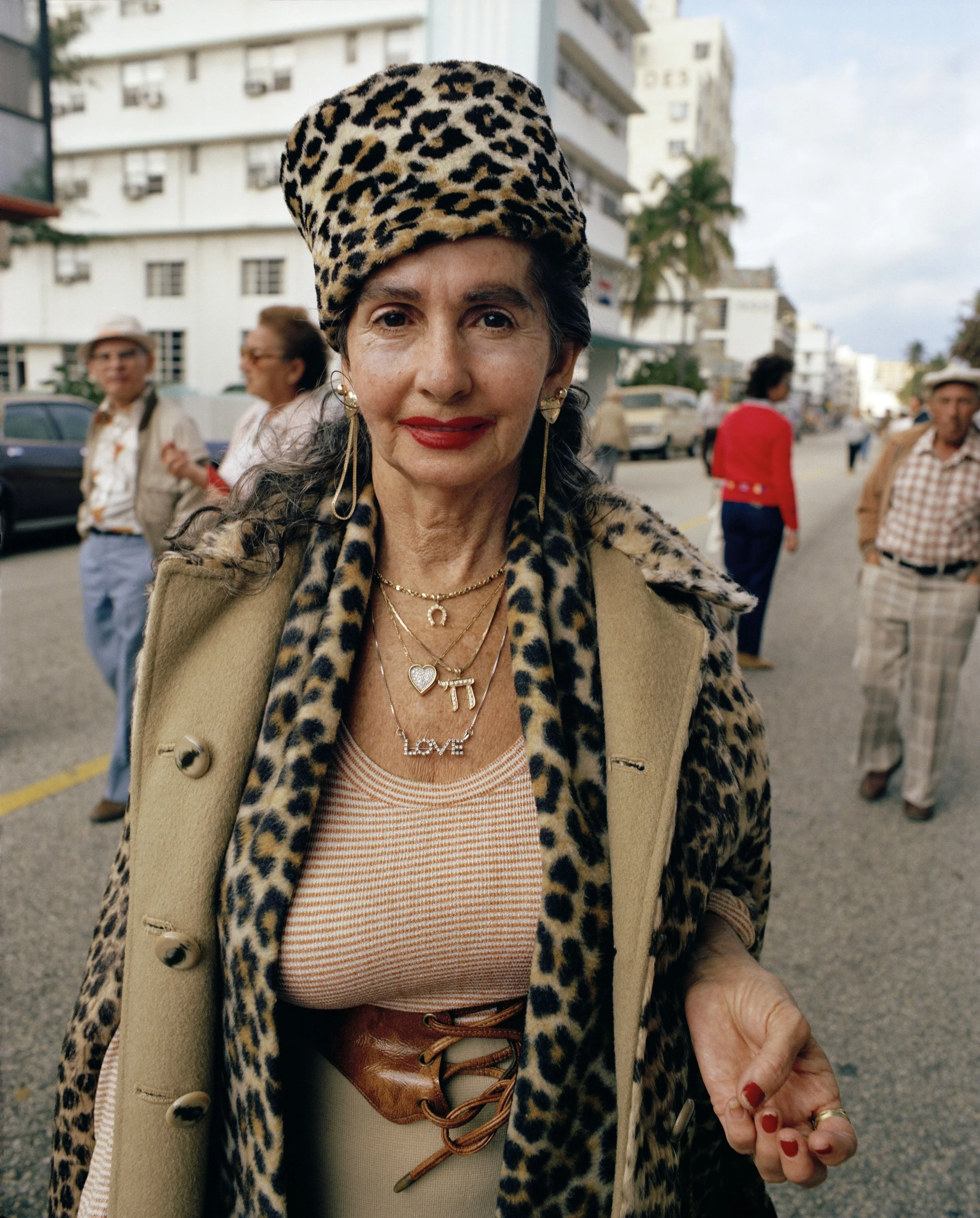
The first time I saw Miami’s South Beach in 1982 I was awed by the beauty of the small Deco hotels, but even more by the sight of the old people sitting on the porches. The first night, I stopped at one of those porches after dinner, and it was love at first sight. I knew right away that I would return again and again to talk with and photograph them. These were the bubbes and zaydes (grandmothers and grandfathers) I wished I’d had. I loved best their simple lives and their Yiddish accents. Living on their social security checks in one-room apartments in the small hotels, they walked to do their shopping, and came back to sit on the porch with friends. In the afternoon many took a light chair to the beach where they sat in circles singing old Yiddish songs, or they played cards or dominoes, or they visited. I began doing video as well as photographs because I loved the sound of their accented words as much as I loved what they looked like. There were Holocaust survivors and American born, but they all had the Yiddish accent and decried how their children’s Yiddish had been lost. While photographing on one porch, some women warned me not to talk to another woman, “She’s senile, you know.” But when I did talk with her, I found her to be lucid and sensitive, from which I deduced that senility had been given to her as protection against the other women. And on another porch one woman was smoking in such an unusual way that I asked her to let me photograph her smoking. “Why not?” she replied. They loved Miami. “If I weren’t here, I’d be in New York in the cold, in God’s waiting room. Here I’m free, I do whatever I want.” I was drawn to return again and again over the next four years, until the gentrification began making the South Beach the hip place for young people that it soon became.
Gay Block As a portrait photographer, Gay Block began in 1973 with portraits of her own affluent Jewish community in Houston and later expanded this study to include South Miami Beach and girls at summer camp. Her landmark work with writer Malka Drucker, RESCUERS: Portraits of Moral Courage in the Holocaust, both a book and traveling exhibit, has been seen in over fifty venues in the US and abroad, including the Museum of Modern Art, NY, in 1992. In 2003 Block’s 30-year portrait of her Mother in photographs, video, and words, Bertha Alyce: Mother ExPosed, was published by UNM Press and began as a traveling exhibit. Also published in 2003 by Skylight Paths is another collaboration with Drucker, White Fire: A Portrait of Women Spiritual Leaders in America. In 2006, Block re-photographed and interviewed women who were girls in her 1981 series from Camp Pinecliffe. This series is a video titled “Camp Girls.” Radius Books, published About Love: Gay Block Photographs, 1975-2010, and a new edition of RESCUERS: Portraits of Moral Courage in the Holocaust. Block’s photographs are included in museums and private collections including MoMA New York, San Francisco MoMA, and The Museum of Fine Arts, Houston.
www.gayblock.com
Dornith Doherty:
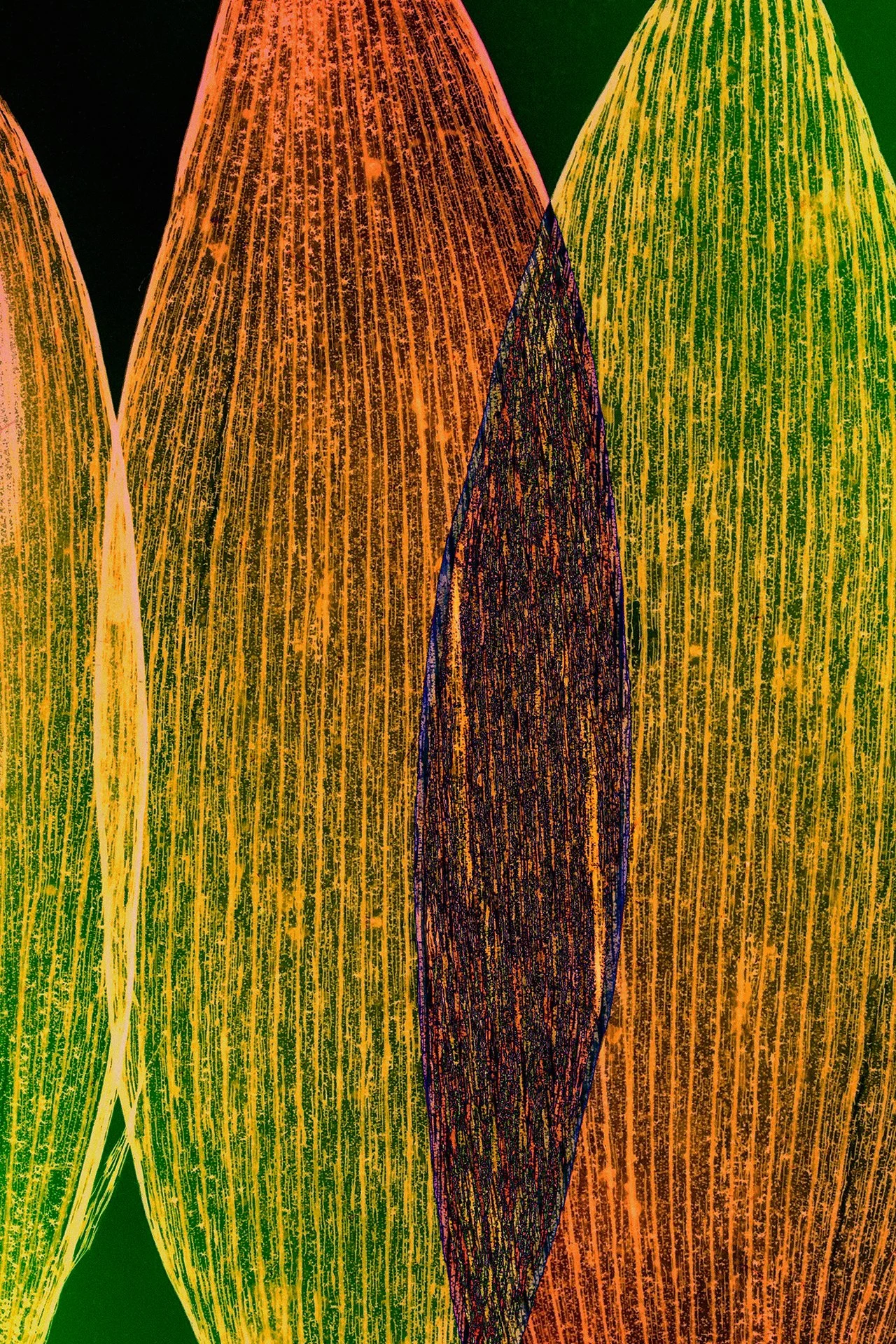
The artworks in Botanical Fragments combine rescued mid-twentieth century microscope slides with herbarium specimens from different eras and locations. These pieces explore the intersection of scientific research, archival practices, and the intrinsic beauty of botanical life across time.
Dornith Doherty is a Guggenheim Foundation Fellow and Fulbright Scholar, Dornith Doherty is an artist working primarily with photography, video, and scientific imaging. In projects that interweave the evidentiary and metaphoric powers of photographic images, Doherty illuminates ecological and philosophical issues that are often neglected when considering human entanglements in the environment. Doherty received her MFA in Photography from Yale University and serves as Distinguished Research Professor at the University of North Texas. She is represented by Moody Gallery, Houston. Her work is held in numerous public and private collections and has been exhibited widely in the US and abroad, including solo exhibitions at the National Academy of Sciences and the Amon Carter Museum of American Art, among others. Curated group exhibitions have been presented at the Denver Museum of Art, the Smithsonian National Museum of Natural History, the Royal Albert Memorial Museum in England, the Broad Museum in Michigan, and Crystal Bridges Museum of American Art.
Melanie Friend:
After working as a photojournalist in the 1980s and 1990s, I started to work with voiced testimonies as well as images to try to represent hidden violence and the complexities of war experience more effectively. With The Home Front (2013), I returned to the still image, aiming to make visible the way war penetrates civilian life. Whilst state violence disrupted the domestic space in my works Homes and Gardens: Documenting the Invisible (1996) and No Place Like Home: Echoes from Kosovo (2001), in The Home Front, the tranquility and beauty of the English seascape is disrupted during air shows by the roar of fighter jets. This work looks at the normalization of war, as experienced on the home front, rather than in the conflict zone, focusing on the staging of military might for the UK public. Meanwhile, on the ground at the Royal Air Force bases, nostalgia for World War II heroism is expressed through Living History group re-enactments.
During the 1980s and 1990s Melanie Friend worked as a photojournalist, both as a member of the UK women’s photography agency Format, and independently; her work was published in The Guardian and other publications. Thereafter she focused on wider aspects of war through long-term projects, using participants’ voices as well as images. International touring exhibitions included Homes & Gardens: Documenting the Invisible (1996) which highlighted human rights abuses in Kosovo, and Border Country (2007), which focused on asylum seekers detained in the UK’s immigration removal centres. Her book No Place Like Home: Echoes from Kosovo was published in 2001 (Midnight Editions, USA). The Home Front (2013), an Impressions Gallery touring exhibition and book (Dewi Lewis Publishing in association with Impressions Gallery), looked at the normalisation of war, and how war penetrates civilian life through the staging of military power at air shows. Later exhibition venues included the Sol Mednick Gallery, Philadelphia (2017), University of Ryerson, Toronto (2018) and Farleys Gallery (Lee Miller archives), 2020, UK. In 2020 The Plain (Dewi Lewis Publishing), focused on the military training landscape of Salisbury Plain. Friend’s 1980s work, including images of the Greenham Common women’s peace camp, has recently been shown in group shows at Tate Britain and the Barbican Gallery, London. From 2003 to 2019 Melanie was Reader in Photography at the University of Sussex, UK.
Susan kae Grant:
Night Journey is an on-going body of work that uses the shadow as metaphor to examine the perceptual and psychological aspects of dreams, memory and the unconscious. The work consists of four complimentary forms; a room-size installation of murals on chiffon with sound recordings; a suite of large-scale individual black and white works on paper; a video projection; and most recently works on paper presented as triptychs. To date the Night Journey series is divided into six working chapters, each of which has subtle differences that evolved over time and mark a new group of images within the series. Based on personal experience and scientific research, the inspiration for Night Journey can be traced back to my childhood premise that dreams take us to far away places and are perceived as physical and psychological worlds that exist outside of a bedroom. Having recorded dreams using a variety of methods, in 1993 I focused my attention on the nature of REM sleep, and received funding to conduct research at the Southwestern Medical Center Sleep Laboratory in collaboration with sleep scientist, Dr. John Herman. Using myself as subject, I was tape recorded in the laboratory on many occasions while awakened from REM sleep. These “awakenings” along with audio recordings and journal sketches provided vivid access to memory and the dream-state and continue to serve as inspiration for the work. My curiosity in conducting research in the sleep lab was to gain access to the subconscious in order to see and experience what the dream-state looked like as opposed to examining the psychoanalytic meaning of dreams. In creating the final images my intent is to capture and portray unconscious visual memory as opposed to illustrating any one specific dream. In the studio, I work by intuitively reading phrases and spontaneously fabricating images with similar narratives, emotions and gestures as in the lab recordings. Some of the later works also represent and portray familiar objects that float in and out of the dream state while a video component brings fragments of the dreams and memory back to life. To create the work, I photograph shadows of models and props in my Dallas studio using a 4×5 view camera with a digital Leaf back. When fabricating the environments, I strive to design sets with a sense of mystery and ambiguity to provoke a narrative with more questions than answers. When finished, I invite models into the studio and intuitively direct them through a series of gestures and poses until the narrative comes to life. At this point, the dream and inspirational phrases no longer matter. What matters is the emerging narrative.
Susan kae Grant is an inventive and influential artist, mentor, and educator. Her innovative studio practice and distinct personal vision represent one of the mediums sustained and recognizable contributions to fabricated photography and book art. She has lectured and exhibited throughout the United States and internationally, from Spain to Japan. Public collections of her work include George Eastman Museum; J. Paul Getty Museum; Minneapolis Institute of Art; Tokyo Photographic Museum; Victoria & Albert National Art Library; Center for Creative Photography; and the Museum of Fine Arts, Houston. Forthcoming Monograph: Night Journey (MW Editions, Fall 2026). Gallery Representation: Conduit Gallery, Dallas.
Mary Margaret Hansen:
Finding Our Way was a photographic installation designed to serve as the catalyst for conversations on women’s issues in Texas and photography as a medium of self-expression. Paper City’s Catherine Anspon curated Finding Our Way for FotoFest and Houston Center for Photography as a part of Talent in Texas VI in 2015. The project was funded in part with a grant from the City of Houston through Houston Arts Alliance.
Mary Margaret Hansen and Patsy Cravens pulled images from a trove of nude photographs taken of one another in the early 1980s and used them in assemblages and tableaus that conveyed confinement, flight, freedom and moving on. The goals of their photographic installation was to use their images to provoke conversations on 1) women made visible through photography and 2) women’s issues in Texas during two junctures in time. The 1980s, when the photographs were taken, reflected the vast cultural upheaval of the second wave of feminism. Women had ‘the pill’ and new opportunities. Houston, Texas, was in the forefront on women’s issues and in 1977, hosted the federally funded National Women’s Conference that drew the wives of three presidents. However, thirty-eight years later, the ‘pill’ is under siege and women still do not receive equal pay for equal work. Texas is again in the lead, though this time, by denying women health care and reproductive rights. The timing could not have been better for Finding Our Way’s public conversations. Hansen and Cravens collaborated with Rice University’s Center for the Study of Women, Gender and Sexuality and University of Houston’s Women’s Gender & Sexuality Studies to create a multi-generational audience. Built into the photo installation’s concept was the notion that Finding Our Way would continue to grow after its run at FotoFest 2015. Finding Our Way has a project blog and is on Facebook and Instagram, Twitter and Vimeo.
Mary Margaret Hansen’s work as a writer and visual artist spans fifty years. She has shown work in solo and group exhibitions, produced site-specific installations and served as lead artist for a City of Houston art project. Her ongoing passions are crafting personal essays, assembling photo collages, printing photographs from negatives, and authoring blog posts, travelogues and an ever-expanding memoir. Not a day goes by that she do not look for connections between and among images and words. Hansen is a Guggenheim Foundation Fellow and Fulbright Scholar.
Graciela Iturbide:
September 26th is the day of the feast for Saint Michael in Chalma, Mexico. Throughout the day, festivities, fairs, and processions take place as part of the devotional tradition honoring the patron saint. It is also an occasion for some people to wear costumes, like the woman in the photograph who, amid the celebration, walks neatly across the dirt ground in her plastic sandals and white wings. Iturbide chooses not to show her face—a recurring device in her work—and instead lets the clipped wings and the gesture of her hand gathering her dress reveal her identity and attitude as she walks. The image bears witness to the photographer’s obsession with the gesture of disguise and the mask as ways of creating fiction and reality in everyday life. Graciela Iturbide’s work stands out for her personal involvement and for building intimate relationships with the communities she documents. Her camera seeks to draw close to her subjects in such a way that the final image resists a purely anthropological reading.
Graciela Iturbide was born in 1942 in Mexico City. In 1969 she enrolled at the age of 27 at the film school Centro de Estudios Cinematográficos at the Universidad Nacional Autónama de México to become a film director. However she was soon drawn to the art of still photography as practiced by the Mexican modernist master Manuel Alvarez Bravo who was teaching at the University. From 1970-71 she worked as Bravo’s assistant accompanying him on his various photographic journeys throughout Mexico. In the early half of the 1970s, Iturbide traveled widely across Latin America in particular to Cuba and several trips to Panama. In 1978 Iturbide was commissioned by the Ethnographic Archive of the National Indigenous Institute of Mexico to photograph Mexico’s indigenous population. Iturbide decided to document and record the way of life of the Seri Indians, a group of fisherman living a nomadic lifestyle in the Sonora desert in the north west of Mexico, along the border with Arizona, US. In 1979 she was invited by the artist Francisco Toledo to photograph the Juchitán people who form part of the Zapotec culture native to Oaxaca in southern Mexico. Iturbide’s series that started in 1979 and runs through to 1988 resulted in the publication of her book Juchitán de las Mujeres in 1989. Between 1980 and 2000, Iturbide was variously invited to work in Cuba, East Germany, India, Madagascar, Hungary, Paris and the US, producing a number of important bodies of work.
Priya Kambli:
One of my most startling early childhood memories is of finding one of my father’s painstakingly composed family photographs pierced by my mother. She cut holes in them so as to completely obliterate her own face while not harming the image of my sister and myself beside her. Even as a child I was aware that this act was quite significant - but what it signified was beyond my ability to decipher. As an adult I continue to be disturbed by theseartifacts, which not only encompass the photographer’s hand but also the subject’s fingerprints. Even though her incisions have a violent quality to them, as an image-maker I am aesthetically drawn by the physical mark, its presence and its careful placement. These marred artifacts have formed a reference point and inspiration for my new body of work, Kitchen Gods, but they do not limit the form my own work takes. My need to decipher and address my family photographs is personal. My work is rooted in my fascination with my parents – both of whom died when I was young. Therefore for me these family photographs hold even more mythological weight. In my work I labor to maintain my parents the way Indian housewives do their kitchen deities. I also strive to connect the generations, my ancestors and my children, who have been separated by death and migration. Like my mother, I alter these photographs to modify the stories they tell.
Priya Suresh Kambli, born 1975 in Mumbai, India, is an interdisciplinary artist working primarily with photographic media and installation. Kambli received her BFA from University of Lafayette, followed by her MFA from University of Houston. In her work Kambli, has revisited, rephotographed, and recontextualized her archive of her family inheritance to create personal work addressing her migrant narrative and feminist practice. She is the recipient of the 2025 Howard Foundation fellowship; winner of 2025 Leica Women Foto Project Award; Creator Labs Photo Fund, Aperture and Google’s Creator Labs. She is the 2025 MacDowell Fellow and has participated in multiple prestigious residencies. Her work has been published in Aperture, Musee Magazine and Art India; been exhibited at Nelson Atkins Museum of Art, Nerman Museum of Contemporary Arts, and Museum of Contemporary Art Arlington, and collected by Duke University, Museum of Fine Arts, Houston, and Museum of Contemporary Photography, Chicago.
Jean Karotkin:
Jean Karotkin’s portrait series (IN)SIGHT features some of the most eminent female photographers working today. As a practice, the artists spotlighted tend towards personal inconspicuousness. They offer intimacy and complexity through their work, sharing their extraordinary ways of seeing while remaining largely out of sight themselves. Becoming the subject of another photographer meant relinquishing the relative anonymity that accompanies life behind a lens. Karotkin photographed her subjects in their natural environment and in natural light, both of which lend themselves to the kind of honesty that’s integral to her work. Similarly, black-and-white film is Karotkin’s preferred medium because of its ability to capture emotional gradations. The resulting portraits not only put faces to renown names, but they also convey remarkable strength, profound intellect, and insatiable curiosity – the fundamental traits of an artist that are all too often undervalued or ignored in women. The project is designed to both educate viewers and inspire the next generation of female photographers.
Jean Karotkin is a New York-based documentary/portrait photographer. Her images celebrating women and disrupting prevailing notions of beauty have received national recognition – from the Dallas Morning News, Oprah, Texas Monthly, CNN, and NPR, Lens, AAP, and FOTONOSTROM Magazines, among others. Karotkin’s work has been exhibited at The Houston Center for Photography, the Amon Carter Museum of American Art, and FOTOFEST Houston. Her work is part of the HMFA photography collection, art collection of the Robert restaurant in the Museum of Design in New York, and the art collection of the Upper West Side Highrise The Belvedere in New York.
An-My Lê:
My return to Vietnam in the mid-1990s was an extraordinary experience. I spent five years photographing in Vietnam from the moment the US renewed diplomatic and economic relations in 1994. There were some landscapes that I knew, but not many. When I was growing up, it was difficult to leave the safety of the city to go out and explore the land because of the fighting. And I certainly didn’t know the northern landscapes because the country was already separated when I was born. And yet, despite years of warfare, somehow there was a kind of familiarity that I was able to connect to when I returned and experienced the northern landscapes for the first time. There is a sense of the layering of history in the landscape, visible or not, that is ever-present. I do believe that landscape, in all its manifestations, is ever-powerful. It transcends politics and will prevail. When we were evacuated from Saigon in 1975, we never thought we could return. Setting foot there in 1994 unleashed so many emotions. I was less interested in a geopolitically informed survey than I was in trying to give shape, through landscape photography, to the Vietnam I had nurtured and probably invented while in exile. Memory and imagination are personal and reactive, not unlike the act of photography itself.
An-My Lê was born in Saigon, Vietnam, and now lives and works in New York. Lê fled Vietnam with her family as a teenager in 1975, eventually settling in the United States as a political refugee. She received BAS and MS degrees in biology from Stanford University and an MFA from Yale. In 1994 she returned to Vietnam for the first time and began making a series of photographs informed by her own memories and by the stories and perceptions of her family. Since then her photographs and films have addressed the impact of war both environmentally and culturally. Lê has received many awards, including fellowships from the NY Foundation for the Arts and the John Simon Guggenheim Memorial Foundation. Her work has been the focus of countless solo and group exhibitions
Annu Palakunnathu Matthews:
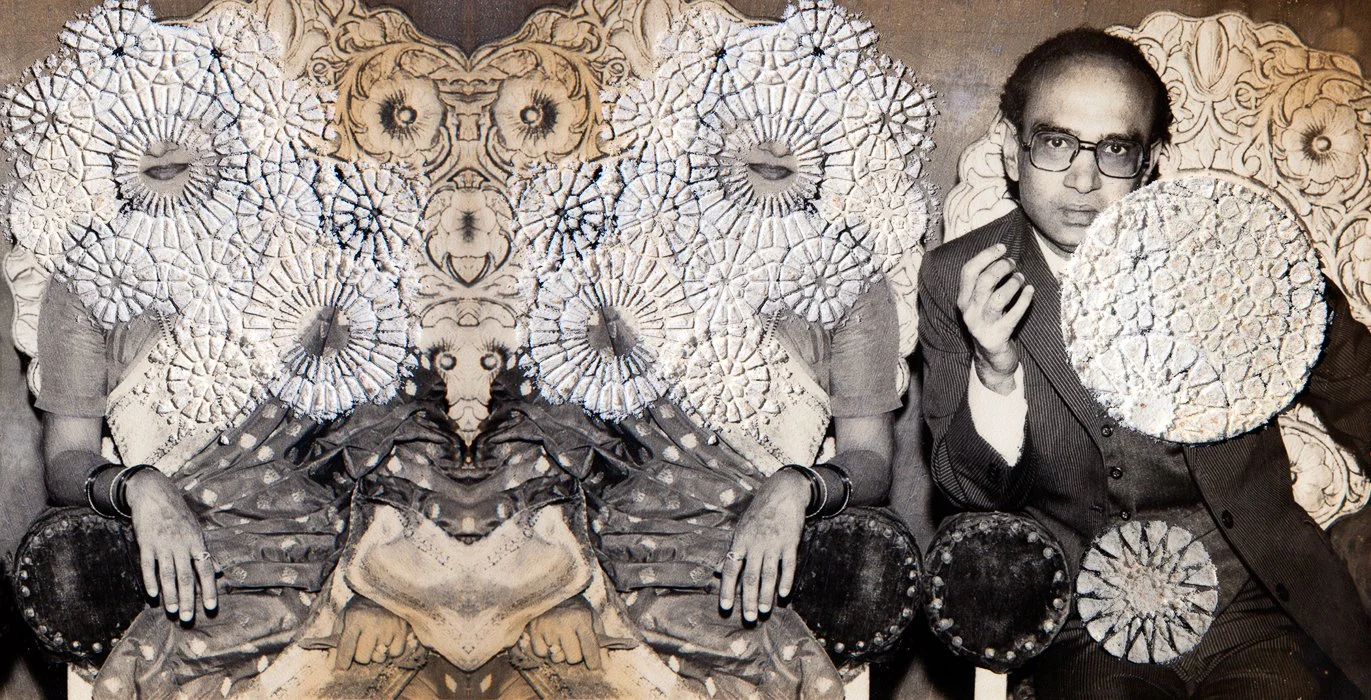
Old family photographs remind us of our past and where we have come from and the silent stories that these photographs insinuate. When flipping through a family album, we become more cognizant of the histories and memories of our own and other families. My work builds on the presumed veracity of photographs to spur a critical reflection on the power of photography and its effect on the perception of memory, family, and the warping of cultures over time. The final ephemeral animation is built from archival images and recent photographs of three or more generations of women. The digital technology and animation make it appear that the old and new images magically flow one into another. This malleable flowing object leaves the viewer to wonder where the past and present overlap and warp. Here, history is distorted, evoking a new dimension of memories, which is uniquely digital.
Annu Palakunnathu Matthews's (b. United Kingdom; lives in Rhode Island, USA) photo-based work draws on old photographs to re-examine historical narratives in the US and South Asia. Though trained as a photographer, her work increasingly uses the ever-expanding digital toolbox and has moved into installations. The result is a blend of still and moving imagery that shifts the viewer's perspective to question established and marginalized histories. Matthew's recent solo exhibitions include Contemporanea ’25, Italy, Dr. Bhau Daji Lad Museum, Mumbai, India, Royal Ontario Museum, Canada, Nuit Blanche Toronto, and sepiaEYE, NYC. Matthew has also exhibited her work at the RISD Museum, Newark Art Museum, MFA Boston, MFA Houston, Victoria & Albert Museum, 2018 Kochi-Muziris Biennale, 2018/2026 Fotofest Biennial, 2009 Guangzhou Photo Biennial, as well as at the Smithsonian. Her essay on the unremembered Indian soldiers of World War II was recently (2022) included in Ars Orientalis, the journal from the Smithsonian's National Museum of Asian Art. Grants and fellowships that have supported her work include a John Gutmann, MacColl Johnson, two Fulbright Fellowships, and grants from the Rhode Island State Council of the Arts. In addition, she has been an artist in residence at Civitella Ranieri, Lightwork, MacDowell, Woodstock Center for Photography, and Yaddo. Minor Matters Books and sepiaEYE published her monograph, "The Answers Take Time," in December 2022. Annu Palakunnathu Matthew is a Professor of Art at the University of Rhode Island. She was also the Director of the Center for the Humanities from 2014-2019 and the 2015-17 Silvia Chandley Professor in Peace Studies and Non-violence. In 2025 Matthew was awarded the University of Rhode Island Advanced Career Faculty Research and Scholarship Excellence Award in Social Sciences, Arts, and Humanities and is currently a board member of the Rhode Island Council for the Humanities. Matthew is represented by sepiaEYE, NYC.
Kenda North:
Like all artists I have drawers and drawers of artwork; we carry the past around like a snail; the images get re-shuffled and re-shelved. Yet there is an interesting history of artists who have destroyed their earlier work. Some did it out of frustration, some to reduce inventory and some to create new conceptual pieces or performances. As I developed this work, cutting and tearing up my large format Polaroid prints, I was often shocked with the chaotic piles of debris which took the place of the carefully archived prints I had carried around for years. As I worked, the structure and visual language I was looking for began to emerge. The earlier photographs were transformed; a resurgence of ideas. These works are photographs of montages made from Polaroid photographs. They are purposely presented on a scale usually considered by painting. As with much contemporary art, the series Resurgence cannot take the label of a singular art form. The original Polaroid photographs were made in New York City and Boston in the early 1980’s when I participated in the expansive artist program developed by the Polaroid Corporation. We were given two or three days ‘on camera’ with the 20 x 24 camera and technical assistance. There were no limits on production and the results were immediate. My spontaneous explorations with figures, fabric, long exposures and movement resulted in a lot of prints. I have chosen to reconsider the rich color of the materials and restate the images. The montages were scanned and are UV cured acrylic pigment prints.
Kenda North is Professor Emerita in art at UT Arlington, where she served on the faculty from l989 to 2020. She has received recognition for her teaching and advocacy, including Honored Educator for the Society for Photographic Education South Central Region in 2009 and Outstanding Volunteer of the Year in Education from the Volunteer Center of Dallas County in 2002. She has served on the boards of many non-profit organizations including the Texas Photographic Society, the Society for Photographic Education, the Dallas Talented and Gifted Foundation, the Emergency Artist Support League and the National Council of Art Administrators. She has had over 40 one person exhibitions and over 100 group exhibitions both nationally and internationally. Her work is in major collections throughout the US and Europe, is currently represented by Craighead-Green Gallery in Dallas and can be viewed at www.kendanorth.com.
Aline Smithson:
"Every photograph is a certificate of presence."
--Roland Barthes, Camera Lucida
Fugue State speaks to the potential loss of the tangible photograph in future generations. I observe my children, part of the most documented generation in history, creating thousands of images for their social media outlets, but am painfully aware that they have never made a photographic print and will most likely have no physical photographs to pass down to their grandchildren. This loss of the photograph-as-object, as something tangible to be circulated through the decades, reflects the fading away of specific memories and identities, and the loss of cultural and familial histories in forms that we associate with family preservation. The photographs created for this series sit in an in-between space of the future and the past, demonstrating the clash between images and materiality, where materiality, unfortunately, seems to be losing ground. For this project, after creating analog portraits of people in my life, I have damaged the emulsion of my negatives, wounding the film stock with a variety of chemicals. I then reinterpret the image in the digital darkroom in the original, negative state where the potential for both the restoration and erasure of memory are present. I am in fact, damaging my own photographic legacy as a way to call attention to this shift from the physical to the visual. As an analog photographer, I have watched my practice diminished and altered by the loss of materials and methodologies. Over the years I have collected and created hundreds of portraits, some acquired are almost a century old and it’s made me consider the formal portrait in the midst of the shifting sands of photography, the loss of photograph as object, and most importantly, the loss of photographic legacies.
Aline Smithson is an interdisciplinary artist, educator, editor, and filmmaker based in Los Angeles, California. She has exhibited widely including over 50 solo shows at a variety of international institutions and her work has been featured in publications including The New York Times, The New Yorker, and PDN. Smithson is the Founder and Editor- in-Chief of Lenscratch, a daily journal on photography. In 2012, she received the Rising Star Award through the Griffin Museum of Photography for her contributions to the photographic community and she also received the prestigious Excellence in Teaching Award from CENTER. In 2014, 2019 and 2025, Smithson’s work was selected for the Critical Mass Top 50. Her books and photographs are held in significant museum collections. In 2022, Smithson was recognized as a Hasselblad Heroine. In 2023, the Los Angeles Center of Photography created the Aline Smithson Next Generation Award. With the exception of her iPhone, she only shoots film.
In 1981 Maggie Taylor began to photograph while she was a student at Yale University majoring in philosophy. She primarily took photographs of suburban landscapes and strange objects found in yards. In 1985 she enrolled in graduate school at The University of Florida where she encountered a much broader acceptance of manipulated and fabricated photography, both among teachers and fellow students. Her work is featured in Adobe Photoshop Master Class: Maggie Taylor’s Landscape of Dreams, Solutions Beginning with A, Alice’s Adventures in Wonderland, Album, Edizioni Siz, and No Ordinary Days. Taylor’s images have been exhibited in one-person exhibitions worldwide and are in numerous public and private collections including The Art Museum, Princeton University, The Fogg Art Museum, Harvard University, Harn Museum of Art, University of Florida; Museum of Fine Arts, Houston and The Museum of Photography, Seoul, Korea. In 1996 and 2001, she received State of Florida Individual Artist’s Fellowships. In 2004, she won the Santa Fe Center for Photography’s Project Competition. In 2005 she received the Ultimate Eye Foundation Grant. She lives in Gainesville, Florida.
Maggie’s tools are a flatbed scanner, a small digital camera and a computer. Her materials are found at flea markets and garage sales. Since 2022, she has been using text-to-image AI programs to create elements for her digital collages. Individual objects can be generated, and 19th century photographs in Taylor’s collection can be blended with other images in AI to create different poses and expressions. Her inspiration often comes from the objects and old photographs she collects, mingled with her own dreams and memories. These images are open to interpretation by the viewer and they are meant to be both playful and disturbing. The finished limited-edition prints are made on an Iris inkjet printer on a slightly textured matte paper.
"I create images, and that is much more important to me than explaining what the images mean. There is just no telling what they mean to other people anyway." ~ Maggie Taylor
Wendy Wattriss:
Wendy Wattriss
Carrie Mae Weems:
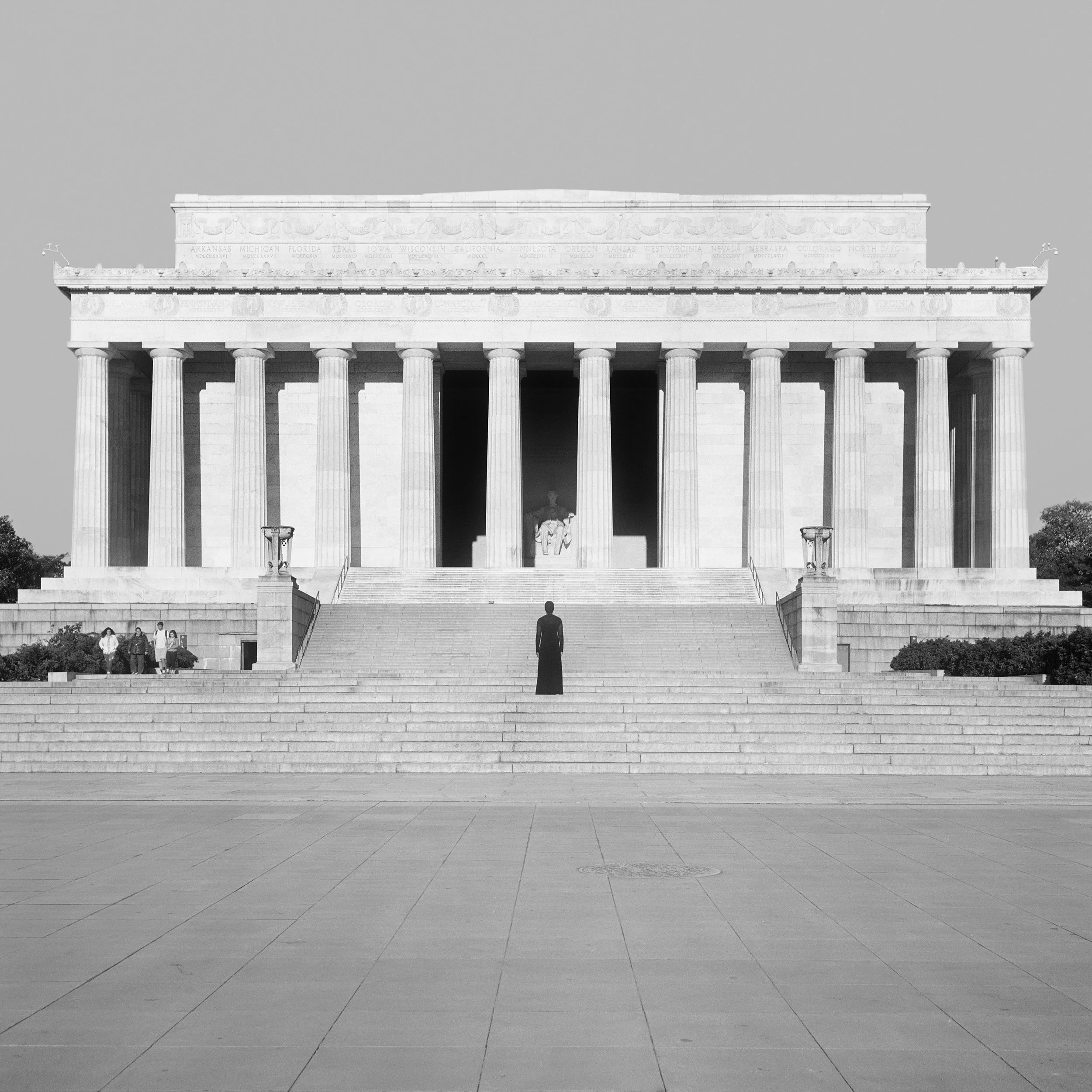
Contested Sites was produced in collaboration with Shore Art Advisory and Lincoln Center. It took place at the Institute of Contemporary Art at Virginia Commonwealth University in Richmond in 2024 and travelled to New York and Washington D.C. in early 2025. An interdisciplinary creation, Contested Sites of Memory, featured live music, spoken word performance, and screenings of new and extant video art. The work reflected on how we memorialize the past and make sense of its losses and triumphs. In an interview Weems shared, “I didn’t set out to make a performance. I had started working on this project… a long time ago, and I’ve staged several different conversations around Contested Sites of Memory with a number of different kinds of public intellectuals. But I’ve also commissioned other artists to respond to the idea of Contested Sites of Memory in monuments and monument-making… I realized, at a certain point, that we actually had a performance. [Contested Sites of Memory] was the natural evolution of bringing all these artists together.”
Carrie Mae Weems a conceptual artist, unpacks and confronts constructions of race and femininity in the pursuit of new models to live by. Grounded in the specificity of her lived experience as a Black woman but universal in its explorations of family relationships, cultural identity, power structures and social hierarchy, her artistic practice is primarily photographic but also incorporates text, fabric, audio, installation, and video. Informed by narrative storytelling, folkloric traditions and the observational methodologies of the social sciences, her approach to image-making ranges from staged and serialized narrative to appropriation and adaptation of archival and ethnographic imagery. Weems takes aim at the complicity of the photographic medium in propagating dehumanizing tropes and the historical omission of Black women from fine art institutions and canons. Weems lives in Syracuse, New York with her husband Jeffrey Hoone. She is currently the Artist in Residence at Syracuse University.
Questions?
For questions about this exhibition, please contact
Exhibitions and Programs Coordinator at exhibits@hcponline.org or 713-529-4755, ext 106.